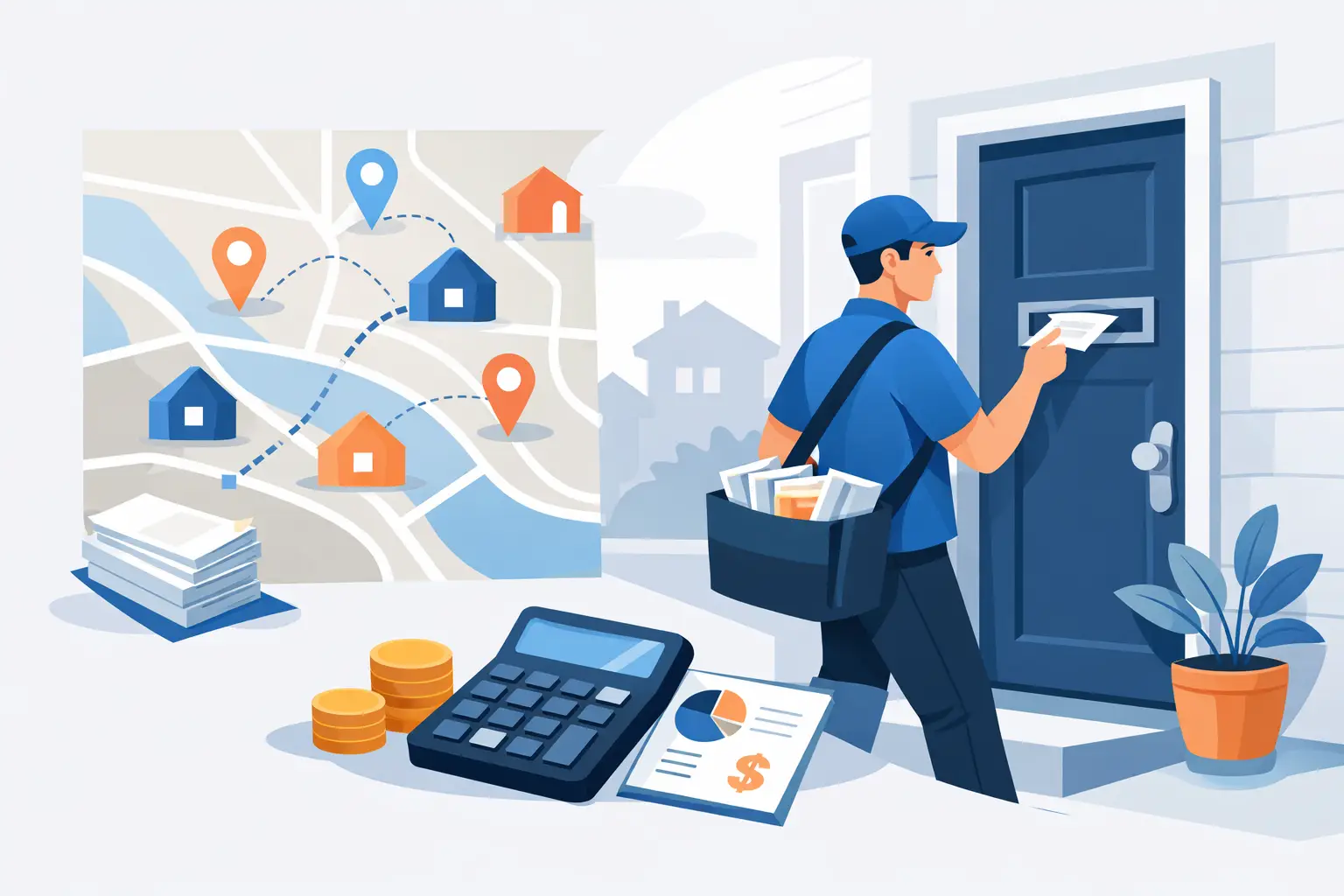
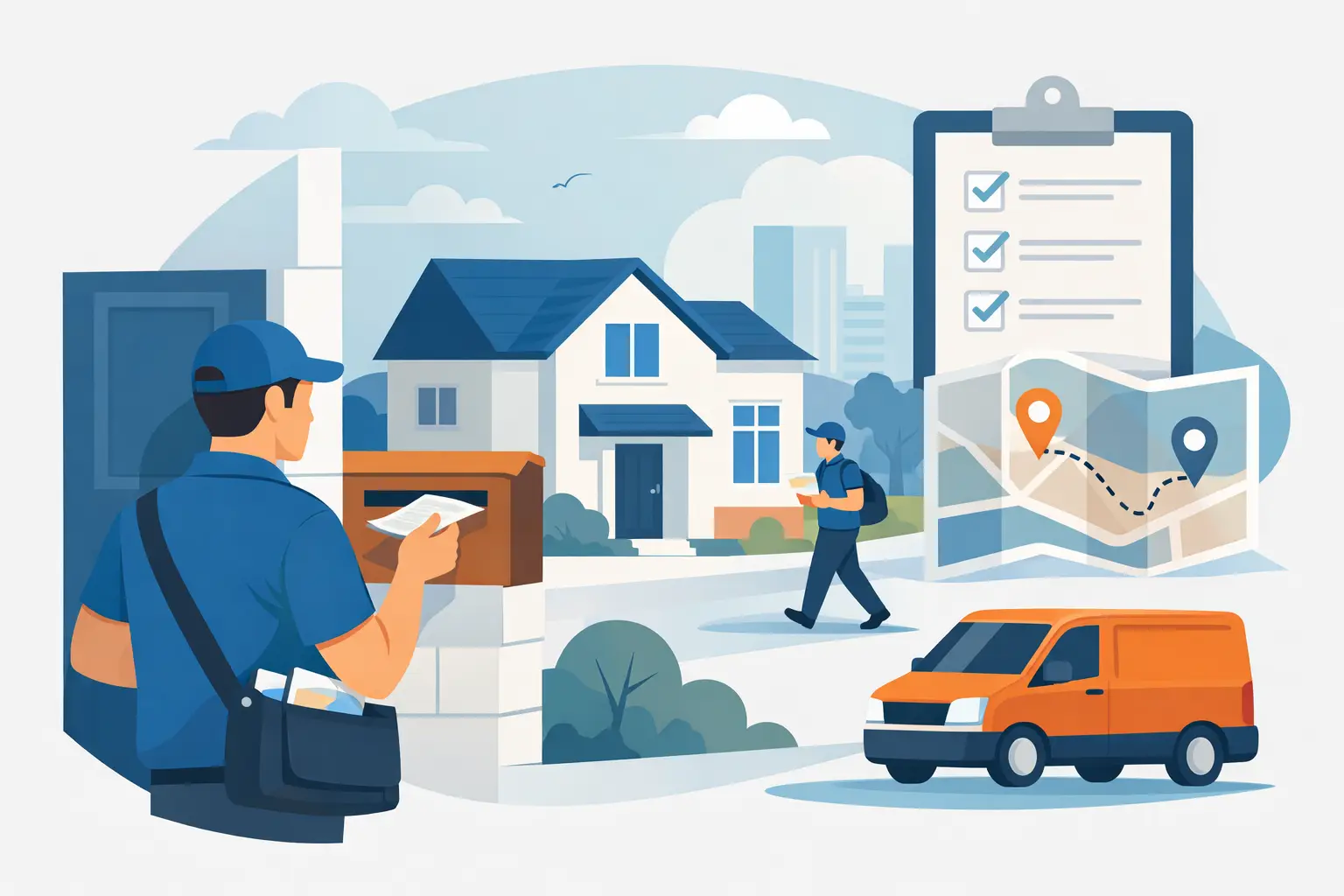
If you are comparing door to door leaflet distribution companies, the decision usually comes down to one question: can you trust them to put your marketing in the right homes, at the right time, without wasting your print spend? That is the real issue for most local businesses. Design matters, offers matter, and timing matters, but none of it counts for much if delivery is vague, poorly targeted or impossible to verify.
For trades, local services, estate agents, gyms, takeaways, schools, care providers and event promoters, leaflet distribution can still produce strong results. It reaches households directly, it works well within defined areas, and it does not depend on changing algorithms or rising digital ad costs. The catch is simple. The quality of the campaign depends heavily on the company delivering it.
What door to door leaflet distribution companies actually do
At a basic level, door to door leaflet distribution companies deliver your printed marketing to residential properties in selected areas. In practice, the better firms do much more than that. They help you choose the right postcode sectors, plan quantities, match delivery format to budget, and give you a clear picture of how the campaign will run.
That planning stage matters more than many businesses expect. A company that knows its patch can tell you whether a broad shared campaign makes sense, or whether a tighter solo distribution would be better for a premium service, time-sensitive promotion or high-value enquiry. They should also be honest about volume. Too little coverage can weaken response. Too much, spread across the wrong area, can burn budget quickly.
Good distribution is not just about getting leaflets out. It is about turning a print run into a campaign with a defined target, realistic timing and some level of accountability.
What separates reliable companies from risky ones
The leaflet distribution sector has a trust problem, and most buyers know it. Business owners have heard the stories – bundles left undelivered, routes cut short, and little evidence to show where the material actually went. That is why reliability should sit ahead of headline price.
A dependable provider should be clear about route planning, delivery windows and how campaigns are monitored. If reporting is vague, or if the answers feel evasive when you ask how delivery is checked, that is usually a warning sign. You are not just buying manpower. You are buying confidence that your marketing has actually reached homes.
Experience also counts, but only when it is backed by clear process. A company that has been operating for years should be able to explain how it verifies routes, how it manages area selection and what kind of reporting you can expect once the job is complete. Reliability is not a slogan. It should show up in how the service is run.
How to assess door to door leaflet distribution companies
Start with targeting. A good provider should be able to distribute by postcode area, sector or local patch in a way that matches your customer base. If you are promoting a domestic cleaning service, a new takeaway menu or a local event, the right households matter more than blanket coverage for the sake of it.
Then look at delivery options. Most campaigns fall into two broad categories: shared distribution or solo distribution. Shared delivery is more cost-effective and can work well for general awareness, local offers and routine lead generation. Solo delivery costs more, but it gives your leaflet the household’s full attention. That can make sense when you want stronger visibility or when each enquiry has higher value.
After that, ask about proof. Some businesses focus only on price per thousand and ignore the bigger issue. If a cheaper provider cannot show where and when your material was delivered, the saving may not be a saving at all. Verified routes and transparent reporting are often worth more than a lower rate with no accountability behind it.
Communication is another useful test. If the planning feels rushed before the campaign starts, the delivery is unlikely to become more precise later on. The better companies make the process straightforward. They ask sensible questions, explain your options plainly and keep the campaign commercially focused.
Price matters, but value matters more
It is reasonable to compare costs. Most businesses have a set marketing budget and need to know what kind of reach that budget can buy. But leaflet distribution is one of those services where the cheapest option can become the most expensive if performance is poor.
A low rate may reflect shared distribution, broad targeting or limited reporting, and sometimes that is perfectly acceptable. If your goal is wide local visibility at a controlled cost, a shared campaign across a suitable area can be effective. But if you need tighter control, specific neighbourhoods or more confidence around delivery, the price should be judged against what is included.
It also depends on your offer. A discount flyer for a local opening can justify a broader, more economical approach. A campaign for a service with higher customer value may justify better targeting and solo delivery. The right setup is not always the cheapest or the most expensive. It is the one that fits the commercial aim.
Why local knowledge improves campaign performance
One advantage of working with an established local provider is practical area knowledge. On paper, a postcode sector can look simple. In reality, local areas vary by housing type, density, access, household profile and likely response. A provider with experience in Peterborough and surrounding postcode sectors can often help you avoid weak planning decisions before any leaflets are printed.
That local understanding is useful when you are deciding where to start, how many homes to cover and whether to repeat delivery in the same area. Repetition often improves results, but only if the geography and timing are sensible. A company that knows the local patch can help you phase campaigns properly rather than guessing.
PB Leaflet Distribution, for example, focuses on reliable household delivery with targeted planning, verified routes and clear reporting – exactly the areas where buyers usually want reassurance before committing budget.
Common mistakes businesses make when choosing a distributor
One common mistake is treating all distribution companies as interchangeable. They are not. The service can look similar from the outside while the quality of delivery, targeting and reporting varies widely.
Another is choosing based on quantity alone. More leaflets do not automatically mean more response. If the area is wrong, or the campaign is poorly timed, increasing volume simply increases waste. Better targeting usually beats bigger numbers.
There is also a tendency to separate print from distribution when they should be planned together. If your leaflet is offering something weak, unclear or poorly timed, even a well-run campaign will struggle. The distributor cannot fix a bad offer. But the right company should be willing to give practical guidance on quantity, area choice and format so your marketing has a fair chance of working.
What a good campaign setup looks like
A well-planned leaflet campaign starts with a clear objective. That might be generating calls, driving bookings, promoting a launch, raising awareness in a new area or supporting a seasonal push. Once that objective is defined, the rest becomes easier to shape.
Area selection should follow customer logic, not guesswork. Quantity should match realistic coverage. Delivery type should reflect budget and the value of a response. Timing should line up with when people are most likely to act. Then, once distribution is complete, you should receive reporting that gives you confidence the campaign has run as agreed.
This is why the best door to door leaflet distribution companies are not just fulfilment providers. They help turn print into a measurable local marketing activity. That does not mean overcomplicating the process. It means making sensible campaign choices from the start.
The right company should make the decision easier
Choosing a distributor should not feel like a gamble. The right provider will keep things clear, explain the options in plain terms and give you confidence that your material will be delivered where it is supposed to go. For most businesses, that combination of targeting, reliability and proof is what turns leaflet marketing from a risk into a workable channel.
If you are weighing up door to door leaflet distribution companies, look past the sales pitch and focus on how the campaign will actually be delivered. A straightforward service, run properly, usually outperforms promises that sound good but say very little. When every print run costs money, clarity is not a bonus. It is part of the result.
A good leaflet campaign does not need hype. It needs the right area, the right format and a company you would trust with your own reputation.