June 2, 2026
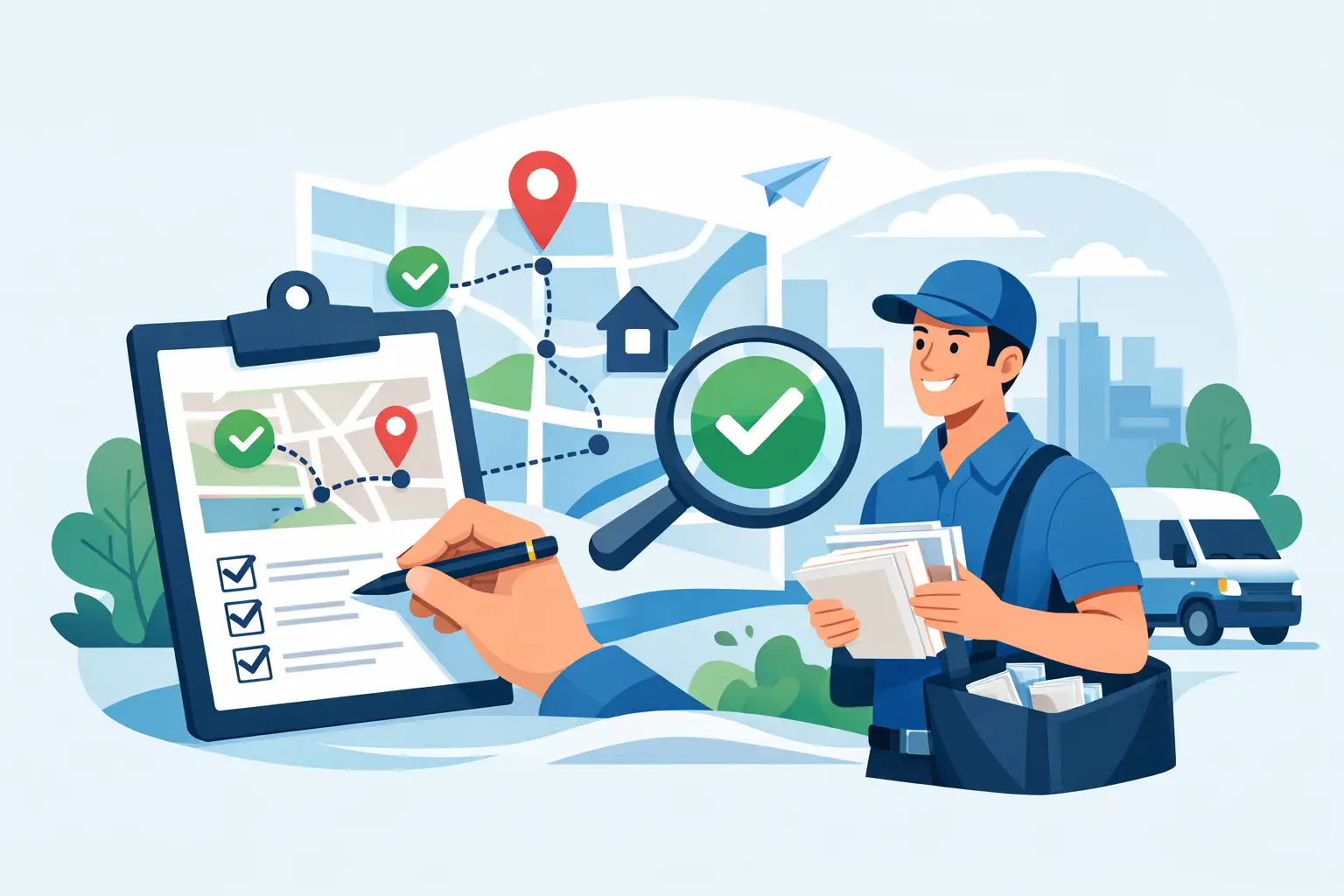
Why Verified Leaflet Delivery Routes Matter
Verified leaflet delivery routes give businesses proof, better targeting and more confidence that every campaign reaches the right…
Read article
If you want more local enquiries in a defined part of Peterborough, a guide to PE1 leaflet marketing starts with one simple point: stop treating every street the same. PE1 covers a mixed catchment, and the businesses that get the best return are the ones that match their message, print volume and timing to the right households rather than chasing blanket coverage for the sake of it.
That matters whether you are a trades business trying to keep your diary full, a takeaway launching a new menu, an estate agent promoting valuations or a local service provider pushing a seasonal offer. Leaflet marketing in PE1 can work very well, but only when it is planned as a campaign rather than an afterthought.
PE1 is not a single customer type. Different roads and housing pockets can respond differently depending on household profile, density, property style and what you are actually selling. A broad message to everyone can still generate awareness, but if you want stronger response rates, local targeting usually wins.
This is where many campaigns go wrong. A business prints 10,000 leaflets, picks a wide area and hopes volume will do the job. Sometimes it does, especially for mass-market offers. More often, the better result comes from choosing fewer streets with a clearer fit and repeating the message properly.
For example, a discount offer for domestic cleaning may perform well in one part of PE1 and poorly in another. A family event promotion may benefit from broader household reach. A home improvement firm may want areas with strong owner-occupier presence rather than a general spread. The right plan depends on your service, margin and how quickly you need enquiries.
The first decision is not design. It is objective. If you do not know what the leaflet is meant to achieve, you cannot choose the right area, quantity or format.
Some campaigns are built for immediate response. These usually include a clear offer, deadline or prompt to book. Others are more about repetition and local recognition, which suits businesses with longer buying cycles such as property services, renovations or professional services. Both can work, but they should not be measured in the same way.
Once your objective is clear, the next step is deciding how tightly you want to target. If your budget is limited, concentrated coverage often makes more sense than trying to reach every available household once. A smaller, well-matched area delivered properly can outperform a larger but diluted campaign.
Timing also matters more than many businesses expect. If your service has seasonal demand, your print should land before the rush, not during it. If you are promoting an event, there is usually a sweet spot where the leaflet feels timely without being too early to act on. For weekly or monthly offers, consistency can be more valuable than a single heavy burst.
Good targeting is not about overcomplicating things. It is about being honest about who buys from you.
If you serve homeowners, focus on areas where that is more likely to line up with your offer. If you run a food business, density and convenience may be more important than property value. If you provide a premium local service, your leaflet, area selection and distribution format all need to support that positioning.
There is also a practical balance between reach and efficiency. Shared distribution can be a cost-effective way to get your message in front of a large number of households, especially if you are testing a new area or offer. Solo distribution gives you more prominence and can make sense where response value is higher or where you want less competition for attention. Neither option is automatically better. It depends on your margins, your audience and how much impact you need from each delivery.
One of the biggest mistakes in leaflet marketing is expecting a single campaign to do all the work. Some offers can generate a quick return from one round, particularly if the need is urgent or the buying decision is simple. But for many local businesses, repeat exposure is what turns recognition into enquiries.
That does not mean you should spend blindly on frequency. It means you should plan with realistic expectations. If you are introducing a new business to PE1, the first round may build awareness more than conversions. The second or third round often benefits from familiarity. Residents may keep your leaflet, recognise your name later or act when the service becomes relevant.
Print quantity should follow the area plan, not the other way round. Too many businesses print a fixed number first and then force coverage to fit the print run. It is better to identify the right catchment, then print to match it. That keeps the campaign cleaner and avoids wasted stock.
You do not need fancy wording to get results. You need clarity.
A strong leaflet tells people what you do, who it is for and what they should do next. If the reader has to work that out for themselves, response drops. Headline, service, offer and contact details should be obvious within seconds.
In practical terms, that usually means leading with the main benefit rather than trying to sound clever. A local reader is not looking for brand theatre. They are deciding whether your service is relevant, trustworthy and worth acting on. Strong local proof, a sharp offer and a clear call to action usually matter more than creative flourishes.
Design still counts, of course. Poor layout, weak print quality or overcrowded copy can make a leaflet easy to ignore. But there is a trade-off. Overdesigned print can look polished while saying very little. Commercially, the best leaflets balance attention with directness.
A lot of business owners avoid leaflet campaigns because they think print is hard to measure. It can be less immediate than digital ads, but that does not mean it is guesswork.
Start by deciding what counts as success. For some businesses, that is phone calls. For others, it is quote requests, bookings, voucher redemptions or web visits from a specific page mentioned on the leaflet. The key is to give the campaign a clear response route and to review results against area, timing and volume.
It is also worth looking beyond raw lead numbers. A smaller number of high-quality enquiries can be more valuable than a large volume of poor-fit responses. If one PE1 campaign brings fewer leads but better jobs, that may still be the better result.
Reliable distribution matters here. If you are paying for local household coverage, you need confidence that your materials are being delivered as planned. That is one reason many businesses choose an established provider with verified routes and transparent reporting rather than simply choosing on price.
Most underperforming campaigns fail for ordinary reasons. The area was too broad. The offer was weak. The leaflet looked busy but did not say enough. The timing was off. Or the business expected instant response from a service that usually needs repetition.
Another common problem is treating print as separate from the rest of your marketing. A leaflet works better when it supports your wider message. If residents have seen your vans, boards, social posts or local presence elsewhere, the printed piece lands with more credibility. If they have never heard of you, your leaflet needs to work harder to build trust quickly.
There is also the issue of budget allocation. Spending heavily on design and printing while cutting corners on targeting or delivery quality is usually the wrong way round. Distribution accuracy and area fit often have a bigger effect on results than cosmetic extras.
For many local businesses, PE1 is a sensible starting area because it allows focused household reach without spreading the budget too thinly. It can be a good test market for a new offer, a useful zone for repeat brand exposure or a practical launch point before expanding into nearby postcode sectors.
That said, PE1 is not automatically right for every campaign. If your service naturally fits households in other parts of Peterborough more closely, wider planning may produce a better return. The commercial question is not whether you can distribute there. It is whether that area gives your leaflet the best chance of producing worthwhile enquiries.
A dependable campaign usually comes from getting the basics right – matching the area to the service, using a clear offer, choosing the right format and delivering consistently enough to build response. That is the difference between leaflets that simply get printed and leaflets that help move the business forward.
If you are planning your next campaign, keep it simple. Start with the right households, give them a reason to respond and make sure the delivery is handled properly. That is where leaflet marketing starts to earn its place in your sales mix.
Ready to plan your next leaflet campaign?
Get a Free Quote
Verified leaflet delivery routes give businesses proof, better targeting and more confidence that every campaign reaches the right…
Read article
Learn when to book leaflet distribution for better timing, coverage and response. Plan ahead for launches, offers, events…
Read article
Leaflet distribution PE3 for businesses that want reliable local reach, targeted delivery, clear reporting and better response from…
Read article