May 25, 2026
Postcode Targeted Leaflet Distribution Works
Postcode targeted leaflet distribution helps local businesses reach the right homes, control spend and improve campaign results with…
Read article
Every print campaign comes down to one question: how far can you stretch your budget without wasting coverage? That is where shared leaflet distribution benefits become commercially useful. If you want steady household reach, sensible cost control and targeted local exposure, shared distribution can be a practical way to keep your campaign moving.
For many local businesses, the aim is not to dominate one street with a premium format. It is to get in front of enough relevant households, often across several postcode sectors, at a cost that still leaves room for repeat activity. Shared distribution works well in that space because it reduces delivery cost per item while still putting your leaflet through the letterbox of the homes you want to reach.
Shared distribution means your leaflet is delivered alongside other non-competing leaflets on the same round. Instead of paying for a dedicated solo campaign, you share the delivery run. The obvious advantage is lower cost, but the real value is broader than that.
This format suits businesses that need regular visibility rather than a one-off splash. A local takeaway promoting a new menu, a tradesperson looking for steady enquiry flow, or a nursery advertising open days may not need an exclusive delivery every time. They need reliable coverage in the right areas, on the right schedule, at a price that makes repeat booking realistic.
This is usually the first reason businesses choose shared distribution. Because delivery costs are split across more than one advertiser, your campaign becomes more affordable. That matters if you are printing in volume or trying to cover multiple areas in one go.
Lower cost does not just save money on one campaign. It can improve your overall marketing plan. Instead of spending your entire budget on a single push, you may be able to run two or three waves across selected neighbourhoods. In print marketing, repetition often matters more than one expensive burst.
Most local services do not win business because someone sees one leaflet once. They win because the name becomes familiar. Shared distribution helps create that consistency without making each campaign too expensive to repeat.
If you are promoting seasonal work, an ongoing offer or a service people may need at short notice, repeat distribution can be far more effective than a single premium run. A plumber, estate agent, cleaner or tutor may get stronger long-term response from regular presence than from one isolated campaign.
A second major advantage is that shared campaigns still allow sensible targeting. Cost efficiency does not have to mean random coverage. You can still focus on postcode sectors or neighbourhoods that match your audience, whether that is family housing, newer estates, high-density residential roads or areas close to your premises.
For businesses working in and around Peterborough, that can make campaign planning much more precise. You may want to focus on PE1 to PE7 based on where you already get enquiries, where you want to build awareness, or where your service margins make the most sense. Shared distribution keeps that planning commercially workable.
Shared distribution is not the right answer for every campaign. It works best when your priority is efficient local reach rather than maximum exclusivity.
If you are promoting a clear household offer, a time-sensitive service, a local event or a new business launch, shared delivery can be a strong option. It is especially useful when your leaflet has a straightforward message and a good reason to respond now. A discount, free quote, free trial, limited-time package or opening promotion can all perform well in this format.
It also suits businesses that already understand their best-performing areas and want to increase frequency there. If a certain patch consistently brings enquiries, shared distribution lets you stay visible in that patch without pushing costs too high.
There is a place for both formats, and the right choice depends on the campaign objective.
Solo distribution gives you exclusive presence on the round. That can be useful for premium campaigns, luxury services, major launches or situations where you want full attention on one message. It may also suit high-value customer acquisition where each lead is worth enough to justify the extra spend.
Shared distribution, by contrast, is often the stronger commercial choice when efficiency matters. It allows wider or more frequent delivery for the same budget. If your aim is dependable volume and local awareness rather than exclusivity, shared can offer better overall value.
That is the trade-off. Solo can increase impact per delivery, while shared often improves cost efficiency across the full campaign. Neither is automatically better. It depends on your margins, your market, your creative and how often you intend to distribute.
Businesses sometimes assume lower-cost delivery means lower results. In practice, campaign performance usually depends more on the leaflet itself than on whether the round is shared or solo.
A weak offer, cluttered design or vague message will struggle in any format. A clear headline, strong local relevance, straightforward pricing or benefit, and an easy response route can do very well in shared distribution. People decide quickly. They need to understand what you do, who it is for and why they should act now.
This is why shared distribution tends to work best for practical, easy-to-grasp propositions. Emergency repairs, home improvements, cleaning, classes, takeaway menus, care services and local promotions often fit naturally because the value can be understood in seconds.
One of the biggest concerns in leaflet marketing is not whether the campaign is shared or solo. It is whether the leaflets are actually delivered properly. A cheap campaign has no value if coverage is inconsistent or reporting is vague.
That is why reliable route planning, verification and transparency matter so much. Businesses need confidence that their materials are going where they were booked to go. Shared distribution benefits only hold up when the service behind the campaign is properly managed.
A dependable distributor should be able to explain how areas are selected, how quantities are matched to the round and what proof or reporting is provided after delivery. That accountability is often the difference between a campaign you can measure and one you simply hope worked.
The simplest way to assess it is to look at campaign objective first, then cost.
If your goal is broad local awareness, repeat visibility or regular lead generation from residential areas, shared distribution is often the sensible starting point. It gives you enough reach to test response without overcommitting budget. That is particularly useful for smaller firms that need marketing to remain consistent month to month.
If your business has a higher-value sale and a narrower audience, solo may be worth comparing. But even then, some firms use shared delivery as the base layer and reserve solo campaigns for specific launches or premium offers. It does not have to be one or the other all year round.
To get the best return, the campaign needs to be planned as a whole. Area choice, quantity, timing and message should all support the same objective.
Start with where your customers are most likely to come from. Then match your leaflet content to the audience in that area. A family-focused offer may work better in residential estates, while convenience-led promotions may suit denser urban coverage. Timing matters too. Some services benefit from monthly visibility, while others perform best around seasonal peaks.
If you are testing a new area, do not judge the channel too quickly from one isolated run. Shared distribution often works better when it builds recognition over time. A measured approach usually gives clearer results than a one-off push followed by silence.
The real strength of shared distribution is balance. It gives you local reach, campaign flexibility and a lower delivery cost, while still allowing meaningful targeting. For many SMEs, that balance is what makes print marketing commercially viable.
PB Leaflet Distribution works with businesses that need exactly that – clear area targeting, dependable delivery and a format that makes repeat campaigns realistic rather than expensive. Shared distribution is not the loudest option, but it is often one of the most practical.
If you want your leaflet marketing to be sustainable, not just occasional, shared distribution is worth serious consideration. The smartest campaign is not always the most expensive one. It is the one you can run properly, measure honestly and repeat with confidence when it works.
Ready to plan your next leaflet campaign?
Get a Free Quote
Postcode targeted leaflet distribution helps local businesses reach the right homes, control spend and improve campaign results with…
Read article
Leaflet distribution PE4 for local firms that want reliable delivery, clear targeting and better response from every campaign…
Read article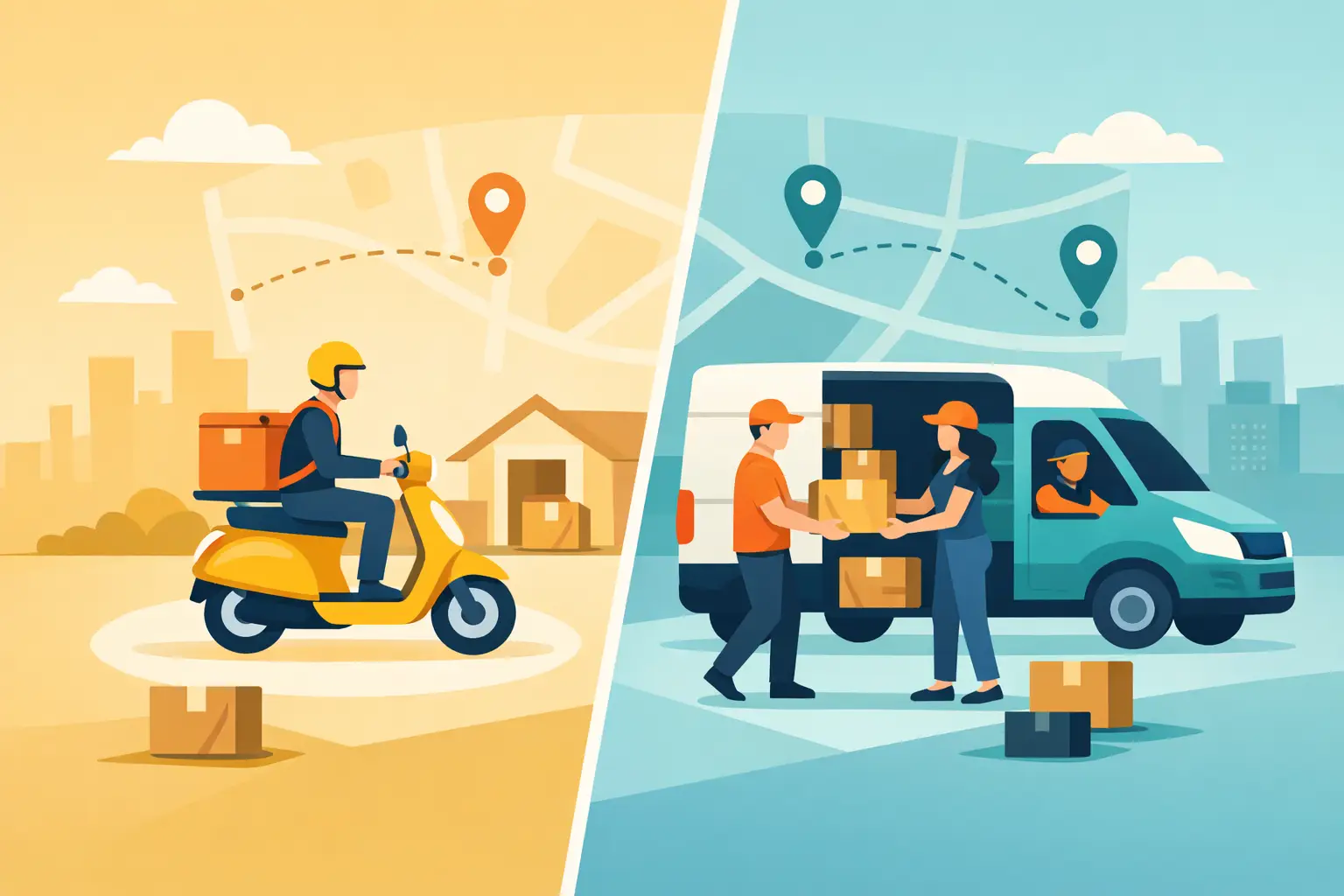
Compare solo delivery vs shared delivery for your leaflet campaign. Choose the right balance of impact, coverage and…
Read article