May 23, 2026
What Is Solo Leaflet Distribution?
What is solo leaflet distribution? Learn how it works, when to use it, and why it can deliver…
Read article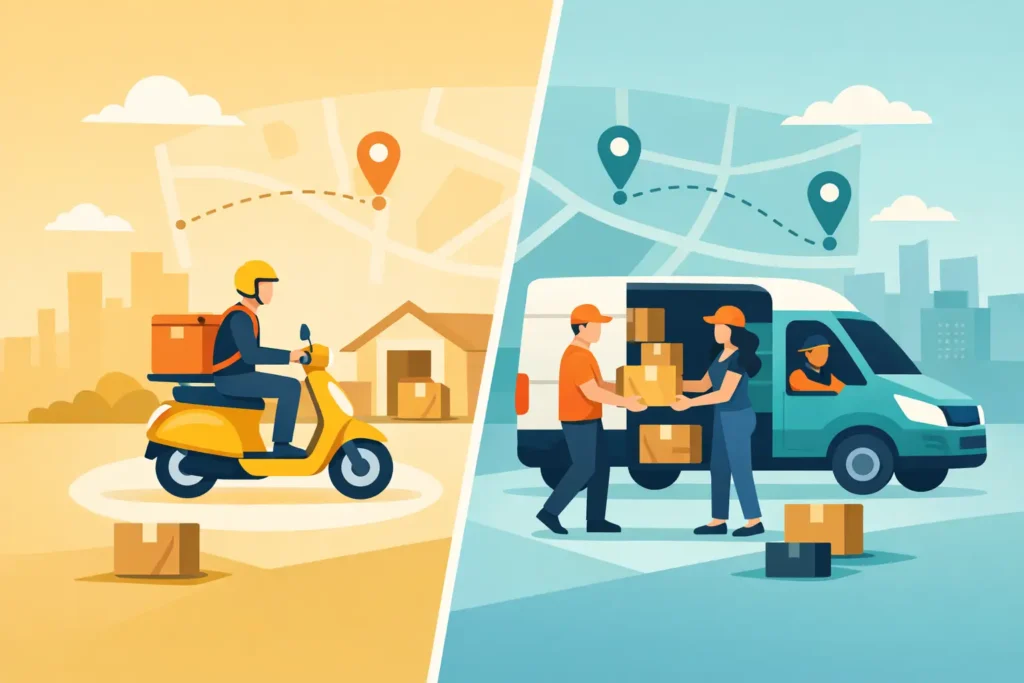
A leaflet can be well designed, clearly priced and aimed at exactly the right households, but the delivery format still affects how it is received. The choice between solo delivery vs shared delivery is not simply about spending more or less. It is about deciding whether your campaign needs maximum attention at the door, or wider coverage for a tighter budget.
For a local business, tradesperson or event organiser, both options can produce enquiries when the area, offer and timing are right. The best choice depends on what you need the campaign to achieve and how quickly you need it to work.
Solo delivery means your leaflet is delivered on its own. There are no other leaflets presented alongside it, so your message has the household’s full attention at the point of delivery. It is a premium option built for impact, clarity and control.
Shared delivery means your leaflet is delivered with a small number of other non-competing items. This makes the cost per household lower, allowing businesses to reach more homes within the same overall budget. It remains a targeted, planned distribution service, but it is designed around value and reach rather than exclusivity.
Neither format is automatically better. A sole trader promoting a time-sensitive service in a small area may benefit more from solo delivery. A business looking to build recognition across several postcode sectors may find shared delivery is the more sensible commercial choice.
Solo delivery is often the right option when the leaflet itself carries a strong, immediate reason to respond. A launch offer, seasonal promotion, new service announcement or event with a fixed date has less time to compete for attention. Delivering that message alone gives it the best chance of being noticed, read and kept.
It is also useful where the value of one new customer is high. If a single booked job, recurring contract or property sale instruction is worth a significant amount to your business, paying more to make a clear first impression can be justified. The aim is not merely to put paper through doors. It is to generate profitable action.
For example, a local kitchen installer may use solo delivery in selected streets where household profiles suit their service. A childcare provider opening registrations may choose it for the catchment around their setting. A restaurant launching a new menu or a community event selling tickets may need a clean, direct message that does not sit among other promotional material.
Solo campaigns can also help when you are testing a new area. With fewer variables around presentation, it is easier to judge the response to your offer, creative and location. If the campaign includes a clear call to action, such as a unique phone number, QR code or booking code, the results can guide future planning.
A solo campaign gives your leaflet more prominence, but it cannot rescue a weak offer or poor targeting. If the message is vague, the price is unclear or the service is not relevant to the homes selected, spending extra on exclusivity will not create demand.
The same applies to quantity. A focused campaign to the right households can outperform a larger untargeted run. Before choosing solo delivery, be clear about the audience you want, the action you want them to take and the value of a response.
Shared delivery works well when coverage matters more than one-off impact. It allows local businesses to put their name, service and offer in front of a larger number of households for a lower unit cost. For many campaigns, that is exactly what is needed.
It is particularly effective for services people may not need immediately but will remember when the need arises. Garden maintenance, home cleaning, window cleaning, local fitness classes, takeaway menus and many trade services can benefit from regular, cost-effective visibility. A resident may not call on the day they receive the leaflet, but repeated exposure makes your business easier to recall later.
Shared delivery is also a sensible route for businesses with a limited test budget. Rather than committing all available spend to a small solo area, you can assess response across a broader selection of streets. This can reveal where your strongest enquiries come from and where future campaigns should be concentrated.
For businesses serving PE1 to PE7, postcode targeting makes this approach more useful. You can select areas that match your service radius, avoid locations that are not commercially viable and build coverage around the neighbourhoods you genuinely want to serve.
Your leaflet will not be the only item received, so it needs to work harder. A clear headline, obvious benefit and straightforward contact details matter. Do not rely on dense copy or assume people will search for the reason to choose you.
Put the strongest message near the top. Use one main offer rather than several competing ones. Make it easy to understand what you do, where you operate and how to get in touch. Shared delivery rewards simple, recognisable marketing that can be understood in seconds.
The quickest way to decide is to start with the result you want, rather than the delivery type. If your goal is to create urgency, protect a premium message or make a high-value offer stand out, solo delivery is likely to be the stronger fit.
If your goal is broad local awareness, regular promotion or cost-efficient household coverage, shared delivery may provide better value. It gives you room to reach more potential customers and repeat the message over time.
A useful way to think about it is frequency versus exclusivity. Solo delivery provides exclusivity on a particular occasion. Shared delivery can make regular frequency more affordable. For many local businesses, seeing a familiar name more than once is what builds confidence before an enquiry is made.
Your campaign timing should influence the decision too. A business with a short booking window, limited appointment availability or a deadline-led promotion may benefit from solo distribution. A company planning ahead for steady work over the next quarter may be better served by a shared campaign repeated in selected areas.
The format matters, but campaign preparation matters just as much. Start by defining the exact households you want to reach. Consider your practical service area, likely customer type and the locations where you can take on work profitably.
Then make the offer specific. “Quality service” is not an offer. “Free estimate for bookings made this month”, “New customer discount” or “Register before the end of term” gives people a reason to respond now. The offer should be easy to honour and worthwhile for your business.
Finally, decide how you will measure the campaign. Ask callers how they heard about you, use a dedicated campaign code or track calls to a specific number where possible. Results are not always instant, especially for home services, so allow enough time to assess enquiries, bookings and repeat contact.
PB Leaflet Distribution plans campaigns around area selection, quantity, timing and delivery format, with verified routes and transparent reporting. That matters because reliable delivery is the foundation of any print campaign. You should know where your material is going and have confidence that the plan has been carried out properly.
Some businesses do not need to choose one format forever. A combined approach can be highly effective. You might use solo delivery for a major launch, limited-time promotion or carefully selected high-priority streets, then use shared delivery to maintain presence across the wider area.
This approach keeps the premium spend focused where it has the greatest potential while allowing your brand to remain visible elsewhere. It also gives you better information over time. You can compare response by area and format, then put future budget behind what produces the most valuable enquiries.
The right delivery choice should feel commercially sensible, not complicated. Choose solo delivery when attention and urgency are worth paying for. Choose shared delivery when reach, repetition and budget control are the priority. Then make sure the message, target area and tracking method are strong enough to turn households reached into customers gained.
Ready to plan your next leaflet campaign?
Get a Free Quote
What is solo leaflet distribution? Learn how it works, when to use it, and why it can deliver…
Read article
Leaflet distribution PE7 for local businesses that want reliable delivery, tighter area targeting and better response from every…
Read article
Peterborough menu delivery service for takeaways, restaurants and food brands that want reliable local reach, better targeting and…
Read article