May 20, 2026
Door to Door Leaflet Distribution Cost
Understand door to door leaflet distribution cost, what affects pricing, and how to plan a reliable local campaign…
Read article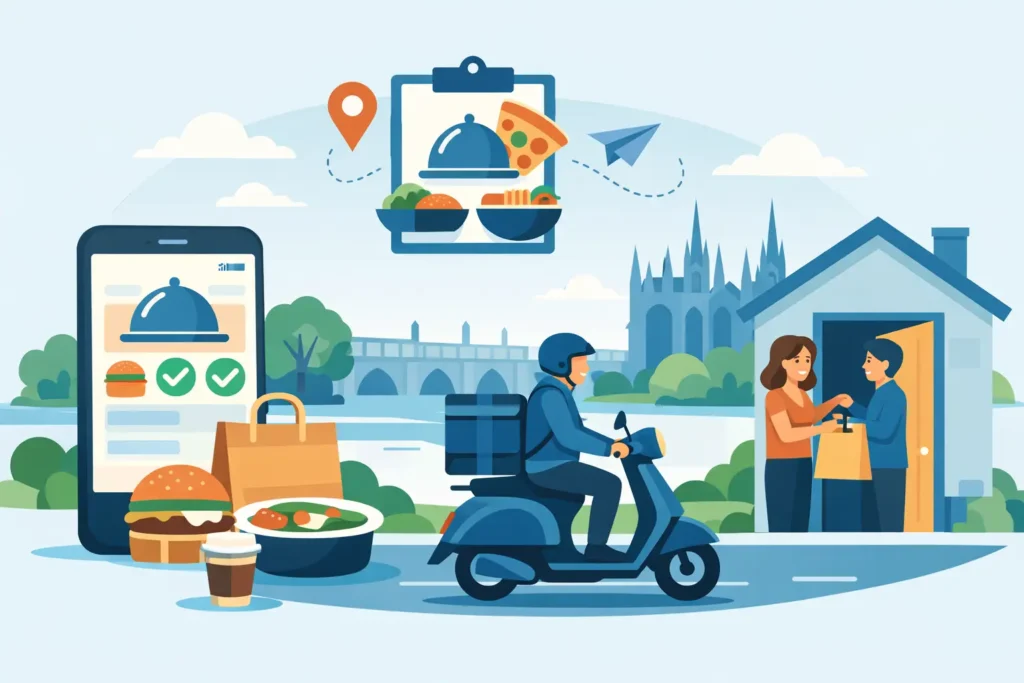
Friday night orders do not usually rise by accident. In most cases, a busy takeaway has put its offer in front of the right households at the right time. A Peterborough menu delivery service gives local food businesses a direct way to stay visible, promote new deals and keep their name in front of customers before they decide where to order.
For takeaways, restaurants and food-led businesses, printed menu distribution still does a job that digital ads often miss. It reaches people at home, sits in kitchens and hallway drawers, and stays available when someone wants a quick ordering option. That matters if you are competing in a local area where convenience often wins over brand loyalty.
A menu is not just a price list. It is a prompt to buy. If a household keeps your menu, your business becomes an easy option when they do not want to cook, when guests turn up, or when they want a low-effort midweek meal.
That is the practical strength of menu distribution. You are not waiting for someone to search online, click an advert or remember your social media page. You are placing your offer directly into local homes, in areas you choose, with timing that suits your campaign.
For many food businesses, the main advantage is control. You can target specific postcode sectors, test different quantities, focus on neighbourhoods that already order well, or push harder into streets where awareness is low. That makes it easier to spend sensibly instead of throwing budget across a broad and unproven area.
There is also a trust factor. Plenty of customers still prefer ordering from a menu they can hold, especially families, older residents and households that make quick group decisions. A printed menu feels immediate and familiar. It does not need a password, an app or a search result.
The obvious fit is takeaways. Pizza shops, Chinese takeaways, Indian restaurants, kebab houses, burger brands and sandwich businesses all benefit from being easy to find at home. But the model also works for meal prep firms, dessert brands, cafés with local delivery, and new restaurant openings trying to build recognition fast.
It is especially useful in three situations. The first is a launch, when you need coverage quickly in nearby residential areas. The second is a relaunch, when you have updated your menu, branding or offer and need to tell previous customers. The third is routine promotion, where regular menu distribution keeps order volumes steady rather than leaving sales to chance.
If your average order value is reasonable and your delivery radius is well defined, this kind of campaign usually makes commercial sense. If your delivery area is too wide, your margins are very tight, or your menu changes every week, the numbers need a closer look.
A good Peterborough menu delivery service is not just about moving print from one place to another. Results depend on area choice, timing, quantity, format and delivery standards.
Area selection comes first. Most food businesses do better when they focus on realistic ordering zones rather than trying to blanket every possible household. If your drivers can reach certain neighbourhoods faster, those streets often deserve priority. If one side of town already generates repeat business, a heavier campaign there may outperform a wider but weaker spread.
Timing matters just as much. A menu arriving at the wrong moment is easy to ignore. A menu landing close to a weekend, a bank holiday, a major sporting event or a local promotion can do far more. Seasonal shifts matter too. Colder months often support takeaway demand, while summer campaigns may need a stronger offer to get attention.
Then there is the menu itself. Design matters, but clarity matters more. If prices are hard to read, offers are buried, or contact details are not obvious, delivery alone will not rescue the campaign. People should be able to glance at the menu and understand what you sell, what is worth ordering and how to place an order.
This is one of the main decisions for any food business.
Shared distribution is often the more cost-efficient option. Your menus go out alongside other printed items, which helps reduce delivery cost while still getting strong local reach. For established takeaways or businesses running regular campaigns, that can be the right balance between spend and visibility.
Solo distribution gives your menu more presence because it arrives on its own. That usually suits new openings, major menu changes, premium offers or campaigns where you want maximum attention. It costs more, but the added impact can be worth it when the goal is immediate awareness.
Neither approach is automatically better. It depends on your budget, your margin, your urgency and how competitive your area is. If you need broad frequency at sensible cost, shared distribution often works well. If you need standout exposure, solo distribution usually has the edge.
In print marketing, the biggest concern is simple: did the materials actually go out where they were meant to go?
That is why reliability matters more than sales talk. A menu campaign only works if the distribution is properly planned, properly carried out and backed by clear reporting. Businesses need confidence that their menus reached the households they paid for, not just a verbal assurance after the fact.
This is where an experienced local distributor has an advantage. Route knowledge, postcode familiarity and verified delivery processes all reduce risk. If you are targeting homes across Peterborough and areas such as PE1 to PE7, local understanding helps avoid wasted coverage and supports more accurate campaign planning.
PB Leaflet Distribution is built around that practical point. Businesses are not just buying distribution. They are buying accountability, route control and a service designed to make local print campaigns easier to trust.
Too few menus and the campaign lacks impact. Too many and you can inflate costs without improving return.
The right quantity depends on your delivery radius, household density, expected response rate and how often you plan to repeat the campaign. One-off bursts can work for launches or offers, but repeated distribution tends to build stronger recall over time. People rarely order from a business simply because they saw it once. Familiarity usually helps.
That does not mean more is always better. If your kitchen capacity is limited, or your drivers can only cover certain areas efficiently, it may be smarter to target fewer homes well than spread too thinly. A good campaign should match your operational capacity, not create demand you cannot serve properly.
The first mistake is poor targeting. Sending menus outside your sensible service area wastes budget and risks frustrating customers who cannot order. The second is weak offers. If the menu gives no reason to choose you over another local option, response may be flat even with solid delivery.
The third is inconsistency. Many businesses try one campaign, expect instant scale, then stop too soon. Print marketing often works best when it is repeated and refined. You learn which areas perform, which offers convert and what level of coverage supports steady orders.
Another mistake is treating the menu like a flyer packed with everything. Too much clutter can hurt response. A menu should make ordering easy. Popular dishes, standout deals, opening times, delivery details and contact methods should be obvious within seconds.
If you are comparing providers, ask practical questions. Can they target by postcode sector? Can they advise on quantity and area selection? Do they offer solo and shared options? Can they show how delivery is monitored and reported?
Those answers matter more than low headline pricing. Cheap distribution is not good value if coverage is vague or trust is missing. A dependable partner helps you plan properly, deliver with confidence and make better decisions on future campaigns.
For menu distribution, that commercial clarity is what counts. You need a service that understands local geography, works to a clear delivery plan and treats your print budget like an investment rather than a box-ticking exercise.
When your menu reaches the right homes consistently, it stops being just another printed item. It becomes part of how local customers decide what to order next.
Ready to plan your next leaflet campaign?
Get a Free Quote
Understand door to door leaflet distribution cost, what affects pricing, and how to plan a reliable local campaign…
Read article
Choose a reliable flyer delivery service that gives you targeted coverage, verified routes and clear reporting for better…
Read article
Need a trusted leaflet distribution company? Learn what to check, what proof matters and how to choose a…
Read article