May 23, 2026
What Is Solo Leaflet Distribution?
What is solo leaflet distribution? Learn how it works, when to use it, and why it can deliver…
Read article
A poor area choice can waste a good print run fast. If you want to choose leaflet areas for coverage properly, the job is not to reach the most homes. It is to reach the right homes, in the right places, at the right time, with enough consistency to generate response.
That sounds obvious, but many campaigns still start with a rough postcode, a stack of leaflets and a hope that volume will do the heavy lifting. Sometimes that works. More often, results improve when coverage is planned around customer fit, local demand and realistic delivery density.
More leaflets do not automatically mean more enquiries. If your offer is wrong for the area, increasing quantity simply increases waste. A better targeted campaign can outperform a larger one because the message lands with households that are more likely to need, want or afford what you sell.
This is especially true for local service businesses. A plumber, estate agent, takeaway, nursery, gym or event promoter will not all get the same return from the same streets. Area choice affects response rate, cost per enquiry and how quickly a campaign starts to pay for itself.
There is also a practical side. Tighter targeting gives you more control over budget. Instead of covering a wide patch once, you may be better off focusing on fewer sectors and repeating the campaign. Frequency often matters as much as reach.
The best way to choose leaflet areas for coverage is to work backwards from the customer you want. Before looking at postcode sectors, ask simple commercial questions. Who normally buys from you? What type of household is most likely to respond? Are you selling a high-value service, an urgent repair, a family offer or a convenience purchase?
A premium home improvement firm may do better in established residential areas with higher owner-occupation. A children’s activity provider may focus on family-heavy neighbourhoods. A same-day local service might prioritise densely populated areas close to its operating base, where response can be handled quickly and travel time stays sensible.
This is where many campaigns go wrong. Businesses often choose areas based on familiarity rather than fit. Just because an area is nearby does not mean it is your strongest prospect area.
If you have run print campaigns before, your own results should guide the next one. Look at where enquiries came from, not just how many leaflets were delivered. A smaller area that produced steady, qualified leads is usually more valuable than a larger one that generated weak response.
Even basic records help. If you track calls, quote requests, booked jobs or voucher redemptions by area, patterns start to appear. You may find one postcode generates plenty of interest but poor conversion, while another gives fewer enquiries but higher-value work.
That kind of information matters because area planning is not only about response rate. It is about profitable response.
Postcodes are useful, but they are only the start. Within one sector, there can be a big difference in property type, household profile and local demand. Treating every road the same can blur the campaign.
A more effective approach is to think in practical zones. One zone might suit a broad consumer offer. Another might be better for premium services. Another might be worth excluding if the likely response is low or the offer is a poor match.
This is where local knowledge has real value. On paper, two nearby areas may look similar. On the ground, one may have stronger owner-occupier density, better fit for trades, or more stable long-term households. In Peterborough and surrounding PE sectors, that local understanding can make targeting far more precise than simply circling a large area on a map.
Your leaflet coverage should reflect what you are promoting now, not just your business in general. The right area for a brand awareness campaign may not be the right area for a time-sensitive offer.
If you are promoting a seasonal service, you may want strong residential concentration and quick delivery turnaround. If you are launching a new business, broader visibility may matter more at the start. If you are pushing a high-ticket service, you may choose fewer areas with better fit instead of wider shared coverage.
There is always a trade-off. Broad coverage can build recognition faster, but it may dilute budget. Narrow targeting can improve efficiency, but only if you have chosen the right households. The answer depends on whether your immediate goal is awareness, lead generation or booked work.
A leaflet campaign only works commercially if you can handle the response properly. That means choosing areas you can serve efficiently.
For many local businesses, distance matters. If your team spends too much time travelling between jobs, the campaign may still generate leads while reducing margin. A compact, well-chosen area can be more profitable than a wider spread of households across a larger territory.
This is particularly relevant for trades and mobile services. If your ideal jobs are in a manageable radius, build coverage around that. There is little value in generating demand in places you cannot service promptly or competitively.
If budget is tight, resist the urge to spread too thinly. A common mistake is trying to cover too many areas at once and ending up with weak presence everywhere.
A better option is usually to prioritise one or two well-matched zones and deliver with enough scale to be noticed. Repetition in selected areas often beats one-off activity across a large patch. People may ignore a leaflet once and respond the second or third time when the timing suits them.
This is why campaign planning should balance geography and frequency. If your budget covers either 20,000 homes once or 10,000 homes twice, the second option may produce stronger results if the area is right and the offer is clear.
Area choice is also affected by distribution format. Solo distribution gives your leaflet full attention, which can be useful for stronger brand impact, premium offers or important launches. Shared distribution lowers cost and can work well for broad local promotion where efficiency matters most.
Neither option is automatically better. It depends on your objective, budget and the quality of your creative. If your offer is simple and price-led, shared distribution in a tightly selected area may be perfectly effective. If you need maximum visibility, solo distribution may justify the extra spend.
The key point is this: area planning and format planning should happen together, not separately.
Timing changes how an area performs. Family-focused campaigns may work better around school terms. Outdoor services can shift with the weather. Event promotion has a shorter response window. Home services often perform better when delivered close to periods of local demand.
The same neighbourhood can respond differently in different months. So when choosing coverage areas, think about when residents are most likely to act. Good targeting is not only about where people live. It is about when your offer is relevant to them.
One reason businesses hesitate with print marketing is trust. They want to know the chosen areas make sense and that delivery will happen as planned. That is a fair concern.
Reliable distribution starts before a leaflet is delivered. It begins with sensible area selection, realistic quantities and clear route planning. Businesses should expect transparency about where coverage will take place and reporting that supports accountability.
That practical planning is where an experienced local provider earns its keep. PB Leaflet Distribution has built its service around verified routes and straightforward campaign planning because businesses do not need vague promises. They need delivery that matches the plan and areas chosen for commercial reasons, not convenience.
If you are deciding where to start, use a short filter. Ask which areas contain the households most likely to buy, which zones you can serve profitably, where past response has been strongest, and whether your budget allows proper coverage and repeat activity.
If an area fails two or three of those tests, it is probably not your best starting point. You do not need a perfect map. You need a sensible first phase that gives you clear, usable results.
Good leaflet campaigns are rarely built on guesswork. They are built on fit, timing and repeatable planning. Choose your areas with the same care you put into your offer, and the campaign has a far better chance of paying its way.
The strongest coverage plan is usually not the biggest one. It is the one that puts your message in front of the households most likely to act, then gives them a reason to remember you when they do.
Ready to plan your next leaflet campaign?
Get a Free Quote
What is solo leaflet distribution? Learn how it works, when to use it, and why it can deliver…
Read article
Choose a reliable flyer delivery service that gives you targeted coverage, verified routes and clear reporting for better…
Read article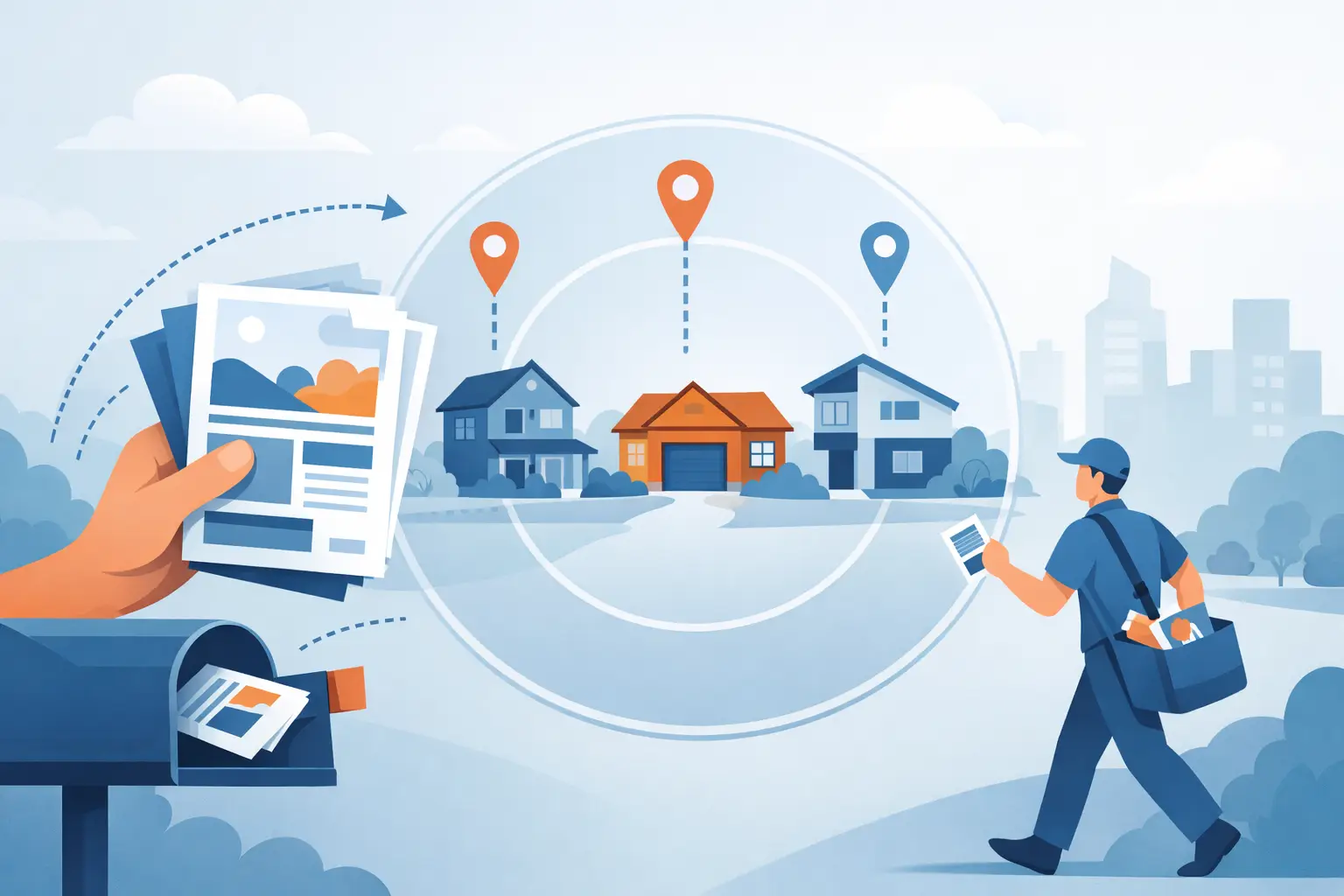
Can flyers reach specific households? Yes - with the right area planning, data and delivery method, leaflet campaigns…
Read article