

June 22, 2026
Leaflet Distribution PE2 That Delivers
Leaflet distribution PE2 for businesses that want reliable local reach, targeted delivery and clear reporting to make every…
Read article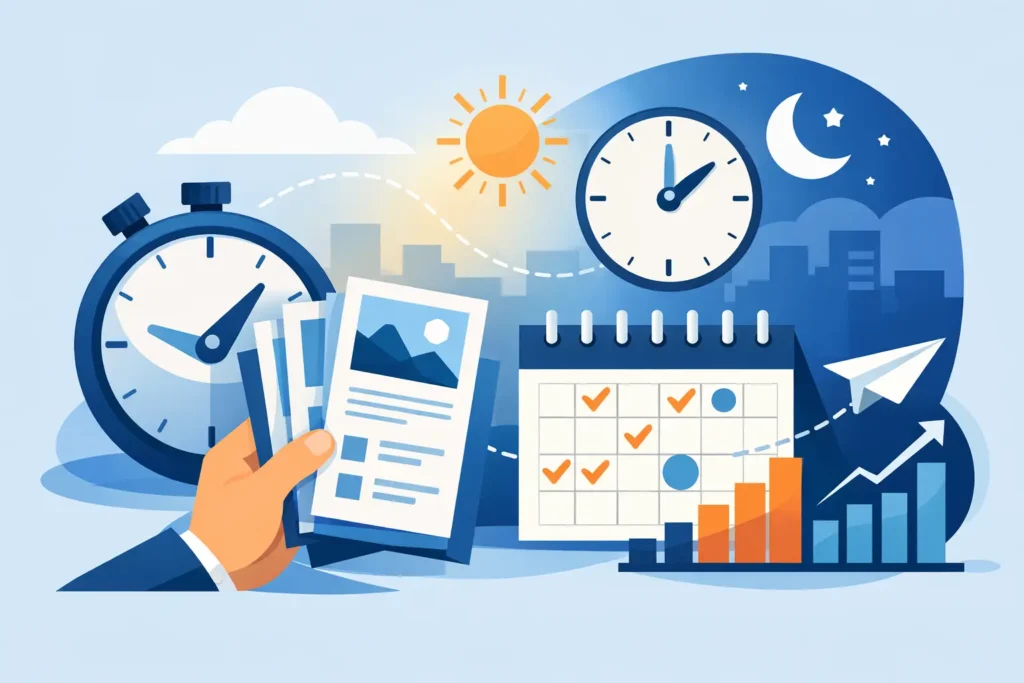
If a leaflet arrives too early, people forget it. If it arrives too late, the decision has already been made. That is why the best times for leaflet campaigns are not just about picking a month and hoping for the best. Timing affects response rates, booking volumes and how much value you get from every print run.
For local businesses, timing usually matters as much as design and targeting. A well-printed leaflet delivered to the right homes can still underperform if it lands at the wrong point in the buying cycle. The strongest campaigns line up with how people actually make decisions – when they are planning, comparing prices, booking services or looking for a local option they can trust.
There is no single answer that suits every business. The best times for leaflet campaigns depend on three things: what you sell, when customers need it and how quickly they tend to act after seeing an offer.
Some services get fast responses. A takeaway menu, emergency plumber or same-week offer can generate enquiries almost immediately. Other sectors work on a longer lead time. Home improvement, nursery places, fitness memberships and event bookings often need repeated exposure before someone gets in touch.
That is why timing should be planned around customer behaviour, not just your own diary. If you only distribute when you have spare budget or leftover stock, you are letting convenience drive the campaign instead of commercial logic.
For many businesses, January is one of the busiest periods for leaflet marketing. Households are resetting after Christmas, reviewing spending, planning home projects and acting on New Year intentions. Gyms, cleaners, tutors, trades and health-related services can all perform well at this point, provided the offer is clear and relevant.
Spring is often a very effective window. From March to May, people are more likely to think about home improvements, gardening, decorating, window cleaning and outdoor services. Estate agents, local events and family-focused promotions can also benefit because households are more active and more willing to make plans.
Summer can be mixed. For some sectors, it works well. Holiday clubs, children’s activities, landscaping, exterior cleaning and hospitality promotions can see strong results. For others, summer is less predictable because people are away, routines change and decision-making slows down. If you are marketing a service that relies on people being at home and paying attention, broad summer coverage may need tighter area selection and sharper timing.
Autumn is often underrated. September and October can be excellent because households are back in routine. Parents are organised again, people are focused on work, and spending returns to normal patterns after summer. This can be one of the best periods for education, home services, financial offers, insulation, boiler servicing and early Christmas promotions.
November and early December can work very well for selected campaigns, especially retail offers, seasonal events, food services and anything linked to Christmas preparation. But there is a trade-off. Competition for attention increases, and if the leaflet is not timely or relevant, it is easier for it to be ignored.
Month and season matter, but so does the week you choose. A campaign delivered at the right time in the wrong week can still miss its moment.
If your business promotes a time-sensitive offer, event or deadline, the leaflet needs to land with enough notice for people to act. Too much notice weakens urgency. Too little reduces response because people feel they have missed the chance or cannot fit it in.
For local events, two to three weeks before the date is often sensible. For restaurant offers or short-term promotions, a much tighter window may work better. For longer-consideration services such as kitchens, roofing or financial planning, a single week matters less than sustained visibility across several weeks.
There is also value in repeating the message. One delivery can produce a response, but repeated campaigns to the same or nearby areas often perform better over time. Familiarity matters. Households may not act the first time they see your leaflet, but they are more likely to respond when your name appears again just as the need arises.
Timing becomes clearer when you look at the type of service being promoted.
Trades and home improvement firms usually perform best when campaigns are aligned with seasonal demand. Roofing, fencing and exterior work often pick up as weather improves. Boiler servicing and insulation tend to make more sense before colder months. Emergency trades are slightly different because the need is immediate, but regular brand presence still helps people remember who to call.
Cleaning companies, gardeners and window cleaners often benefit from regular, repeated delivery rather than one-off bursts. These are services households may consider at several points in the year, so consistency tends to beat occasional large campaigns.
Takeaways, local food businesses and hospitality offers can get results from shorter, more tactical timings. School holidays, pay weekends, local events and quiet midweek trading periods can all shape the best delivery schedule.
For schools, clubs, nurseries and activity providers, lead time is critical. Parents do not usually book on impulse. They compare options, check dates and plan around term schedules. In these sectors, distributing well before enrolment periods is usually stronger than promoting at the last minute.
Retail and promotional campaigns often depend on urgency. Seasonal sales, opening offers and local launches can work well, but only if the leaflet lands close enough to the buying period to stay relevant.
The best campaign timing is not only about calendar dates. It also depends on where you are delivering.
Different neighbourhoods respond differently based on household type, commuting patterns and local demand. A family-focused service may perform better in residential areas with a higher concentration of parents. Premium home improvement offers may need more selective postcode planning. The same leaflet delivered at the same time can produce very different outcomes depending on area choice.
This is where local knowledge makes a practical difference. In Peterborough and surrounding postcode sectors such as PE1 to PE7, timing and targeting work best when planned together. There is little value in choosing the perfect month if the campaign is going to households unlikely to need what you offer.
Some businesses assume earlier is always safer. It is not.
If you are promoting a Christmas menu in October, the leaflet may be forgotten. If you advertise a spring gardening service in the middle of winter, people may agree it is useful but still put it aside. Early distribution only works when the customer is in planning mode and your offer gives them a reason to act now.
Late delivery has its own risk. If a household has already booked a decorator, chosen a nursery or arranged a boiler service, your leaflet is arriving after the decision. Even a strong offer struggles once the buying window has closed.
The best timing usually sits in the middle – close enough to the decision to feel relevant, but early enough to let the customer act.
If you want better results, treat timing as something to measure rather than guess.
Start by matching your campaign to a clear objective. If the aim is immediate enquiries, use a stronger offer and track response in the days after delivery. If the aim is awareness in a target area, judge success over a longer period and look for patterns across repeated campaigns.
Keep the area, quantity and message as consistent as possible when testing timing. If you change everything at once, it becomes difficult to see whether timing improved the result or whether something else did the work.
Reliable distribution also matters here. If you are testing campaign timing, you need confidence that delivery happened where and when it was planned. Without that, timing data becomes unreliable and decisions become guesswork.
The simplest approach is to work backwards from the response you want. Think about when your customer is most likely to need the service, how long they take to decide and how quickly you can convert an enquiry into a booking.
Then choose a delivery window that puts your leaflet in the home at the right point in that process. If the service has regular demand, plan repeated campaigns instead of relying on one hit. If the offer is seasonal, build in enough lead time without drifting so early that the message loses impact.
For many businesses, the best results come from steady planning rather than trying to find one perfect week. A well-timed campaign is useful. A well-timed campaign delivered consistently is usually far more valuable.
Good leaflet marketing is not about chasing a magic date. It is about getting your message into the right homes when people are ready to notice it, remember it and act on it.
Ready to plan your next leaflet campaign?
Get a Free Quote
Leaflet distribution PE2 for businesses that want reliable local reach, targeted delivery and clear reporting to make every…
Read article
Need a trusted leaflet distribution company? Learn what to check, what proof matters and how to choose a…
Read article
Flyer delivery vs newspaper inserts - compare targeting, cost, visibility and response to choose the right print marketing…
Read article