
June 5, 2026
Leaflet Campaign Results Example That Makes Sense
A leaflet campaign results example that shows what good response rates look like, what affects performance, and how…
Read article
A flyer campaign usually starts with a simple goal – get more enquiries from the right households. Where many businesses go wrong is not the design or the offer, but the booking. A proper local flyer campaign booking guide helps you choose the right area, quantity, timing and delivery method before you spend money on print and distribution.
If you are promoting a local service, a new opening, a seasonal offer or an event, booking the campaign properly matters just as much as the leaflet itself. Good planning keeps waste down and gives you a better chance of seeing a clear return. Poor planning tends to mean too broad an area, the wrong quantity, or a delivery type that does not match the budget.
Before you request a quote, be clear on what success looks like. For a plumber, electrician or cleaning company, the aim may be steady local enquiries. For a gym, takeaway or childcare provider, it may be awareness in a tight catchment where people are likely to act quickly. For an event or promotion, timing is often the main factor.
That goal shapes everything else. If you need fast visibility in a small area, solo distribution may be worth the extra spend. If you want wider coverage at lower cost, shared distribution can make more sense. Neither is automatically better. It depends on whether reach or stand-out matters more for your campaign.
You should also know your realistic service radius. A business that mainly works within 5 to 10 miles should not book a campaign that spreads too far beyond its practical coverage. Households outside your working area may see the leaflet, but they are less likely to convert into useful enquiries.
Area selection is where campaign performance is won or lost. Many businesses start by asking for the biggest possible coverage, assuming more homes means better results. Sometimes that works. Often it just stretches the budget too thin.
A better approach is to choose neighbourhoods that match your offer. Trades and home services usually perform best in areas where response can be handled quickly and repeat work is possible. Restaurants, salons and local shops need households close enough to visit regularly. Premium services may benefit from more selective postcode targeting instead of broad coverage.
For businesses working across Peterborough and nearby districts, choosing by postcode sector can make planning easier. If you already know where your customers come from, start there. If you do not, begin with a manageable test area and expand once the results look promising.
One of the most common booking questions is quantity. Too few leaflets and the campaign may not create enough frequency or local visibility. Too many and you can end up paying to reach homes that are unlikely to respond.
In practice, quantity should match the area and the objective. A tightly targeted campaign to a few thousand homes can work well for a higher-value service. A broader awareness campaign may need larger numbers to create enough local presence. If your business is new to leaflet marketing, start with a quantity that gives you meaningful reach while still leaving room to repeat the campaign if needed.
Repetition matters more than many first-time advertisers expect. A single round can produce results, but households often respond after seeing a business name more than once. If your budget allows, it is usually better to plan a sensible quantity over multiple rounds than spend everything on one oversized push.
Timing is not just about when your leaflets are printed. It is about when households are most likely to act. An emergency trades business can market year-round, but a garden service may see stronger results in spring, while a takeaway promotion may work best around weekends, paydays or local events.
Lead time matters as well. If you are advertising a launch, open day or short-term offer, the campaign needs to be booked early enough for printing and delivery to happen in a useful window. Leaving it too late can turn a good idea into a rushed campaign with limited impact.
There is also the question of consistency. For many local businesses, regular distribution beats one-off activity. A campaign booked monthly or in planned bursts often produces stronger recall than an isolated round. That is especially true if customers do not need your service immediately but may need it a few weeks later.
This is one of the biggest booking decisions in any local flyer campaign booking guide, because it directly affects both cost and visibility.
Solo distribution gives your leaflet the household’s full attention at the point of delivery. That makes it a strong option for higher-value services, major promotions, launches and campaigns where brand presence matters. It costs more, but for some businesses the extra response rate justifies it.
Shared distribution keeps costs down by distributing your leaflet alongside other printed items. For broad awareness, community promotions and cost-conscious campaigns, that can be a practical route. The trade-off is simple – lower cost, but also more competition for attention.
The right choice depends on your margins, the strength of your offer and how urgently you need response. If one new customer is worth significant revenue, solo can make commercial sense. If you need broad local reach at controlled cost, shared may be the better fit.
A quick, accurate quote is easier when you have the basics ready. You will usually need the delivery area, approximate quantity, preferred timing and the format of your leaflet. If you are still deciding between options, that is fine, but the clearer your brief, the easier it is to match the campaign to your budget.
It also helps to explain what the leaflet is trying to do. A campaign for a local roofing company after storm season will be booked differently from a campaign for a café launching a lunch offer. The more commercially relevant information you provide, the more useful the recommendation will be.
If you have run leaflet campaigns before, mention what happened. Good response in one area, weak response in another, or a strong return from a repeat run all help shape a better booking plan.
Print marketing only works if the delivery is dependable. That sounds obvious, but it is the issue many businesses worry about most, and for good reason. If you are paying to reach households directly, you need confidence that the campaign is actually carried out as planned.
That is why route verification, clear reporting and local delivery knowledge matter. A cheaper quote is not always better value if there is little accountability behind it. Reliability affects more than peace of mind. It affects whether you can measure response properly and decide what to do next.
Experienced distributors will also help you avoid avoidable mistakes. That may mean recommending a smaller but better targeted area, adjusting the timing, or suggesting a different distribution format based on the type of campaign. PB Leaflet Distribution has built its service around that kind of practical planning – keeping things clear, accountable and focused on results.
A booked campaign should not be treated as a mystery. Before distribution starts, decide how you will track response. That might be a dedicated phone number, a specific offer code, a landing page mentioned on the leaflet, or simply asking new callers where they heard about you.
Results are not always instant. Some households act straight away, while others keep leaflets for later. Response can also vary by trade, offer and season. A campaign for a locksmith may generate quick calls. A campaign for home improvements may take longer to convert but bring higher-value work.
The key is to compare response against the area, quantity and delivery type booked. That gives you a practical basis for improving the next round instead of guessing.
The strongest campaigns are usually the simplest. Choose the right households, set a sensible quantity, book at the right time and use a delivery format that suits the value of the job. Keep the message clear and make sure the service behind the campaign is reliable.
If you approach leaflet distribution like a local sales tool rather than a box-ticking advert, booking gets easier and performance improves. Start with the area that makes commercial sense, not the one that merely looks biggest on paper. That is where better results usually begin.
Ready to plan your next leaflet campaign?
Get a Free Quote
A leaflet campaign results example that shows what good response rates look like, what affects performance, and how…
Read article
Need a trusted leaflet distribution company? Learn what to check, what proof matters and how to choose a…
Read article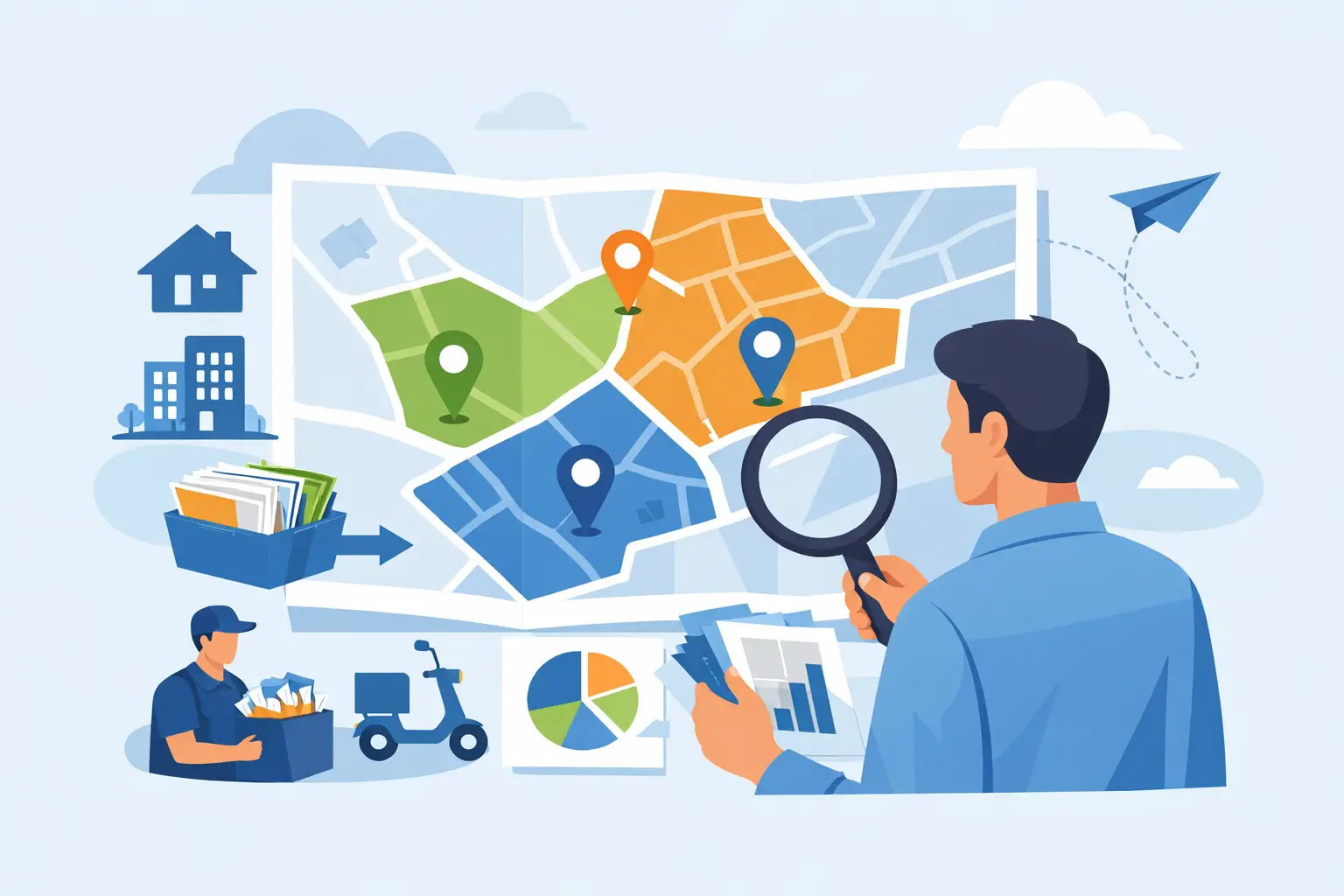
Learn how to choose leaflet areas for coverage with smarter local targeting, better timing and tighter budget control…
Read article