
May 20, 2026
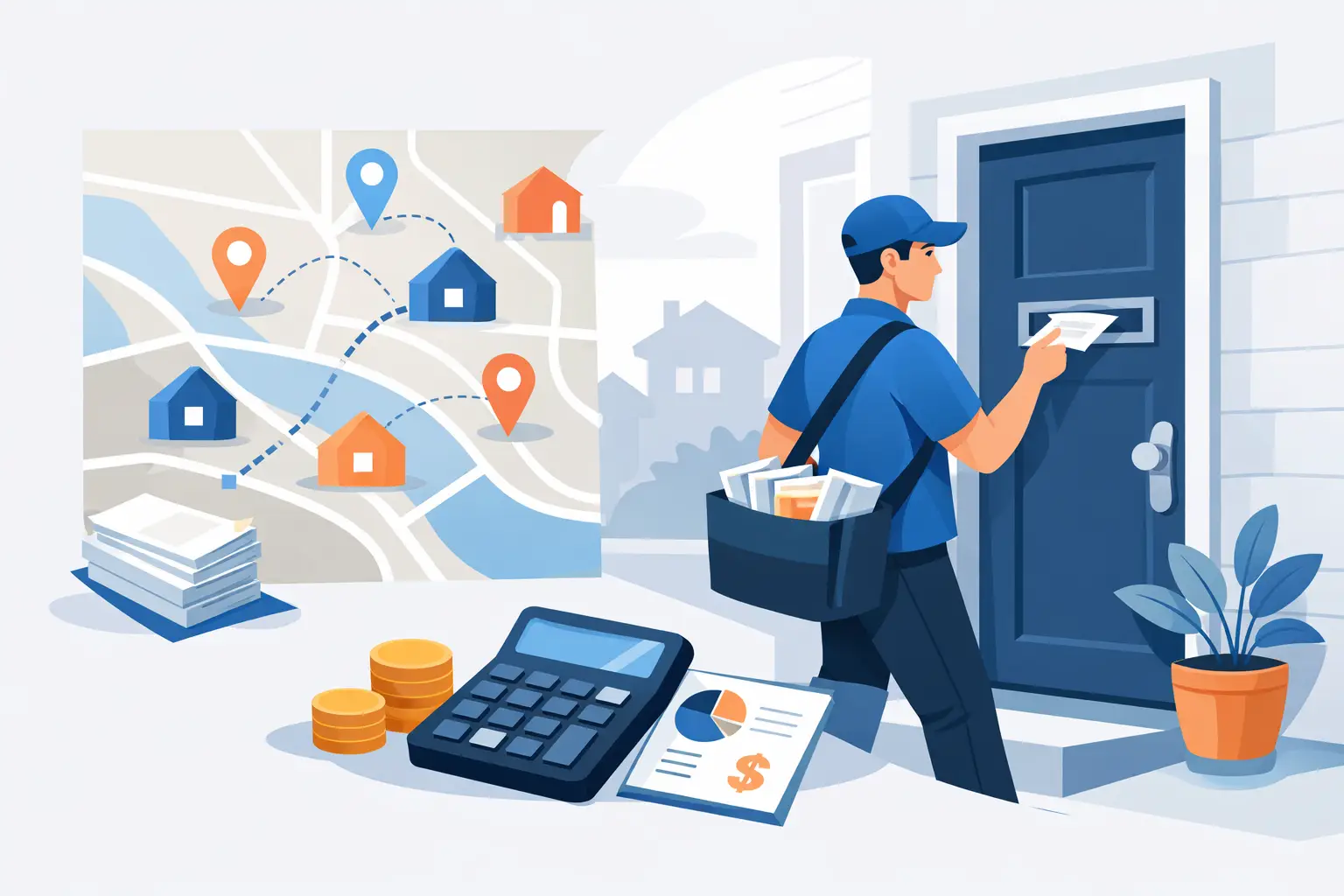
Door to Door Leaflet Distribution Cost
Understand door to door leaflet distribution cost, what affects pricing, and how to plan a reliable local campaign…
Read article
Some sectors get far more from print than others. If you are weighing up the top sectors for leaflet marketing, the real question is not whether leaflets can work – it is whether your service matches a local household need, has a clear offer, and can be targeted to the right area at the right time.
That is why leaflet campaigns still perform well for certain businesses. When people need a service close to home, or they are likely to make a buying decision within their own household, a well-planned delivery can put your message in front of the right homes without wasting budget on a broad audience.
The strongest sectors for leaflet marketing usually share a few traits. They serve a defined local area, depend on regular enquiries, and benefit from repeated visibility. They also tend to offer something that people either need soon, need seasonally, or can act on quickly after seeing an offer.
There is a commercial point here. A leaflet is not trying to do every job at once. It works best when it puts a simple message in front of households likely to respond. If your business relies on local demand, postcode targeting and frequency matter more than flashy design.
Plumbers, electricians, roofers, painters, kitchen fitters, driveway installers and similar trades are among the strongest performers. The reason is simple. Homeowners often need these services close to home, and when they do, they usually want someone local, available and easy to contact.
Leaflets work particularly well here because the service is tied to the property itself. A householder does not need to be actively searching online at that exact moment for your leaflet to register. If a boiler starts playing up next week, or they finally decide to replace the fence next month, your business may already be on the kitchen side.
This sector responds well to area selection too. A company offering premium landscaping may do better in neighbourhoods with larger gardens and owner-occupied housing, while a general handyman service may want broad residential coverage.
Estate agents, letting agents, mortgage advisers, removals firms and property maintenance companies all benefit from direct household reach. Property marketing is highly local, and visibility in the right streets matters.
For estate agents in particular, leaflet campaigns are often less about one immediate instruction and more about staying visible in a patch. Repetition counts. If residents repeatedly see your branding, sold messaging or valuation offer, your name is more likely to come to mind when they are ready to act.
There is a trade-off, though. This sector usually needs consistency rather than a one-off push. If you want market share in a specific area, a single round may raise awareness, but repeat distribution is more likely to build enquiry flow.
Independent restaurants, takeaways, pizza shops, cafés and meal delivery businesses remain a natural fit. Households make regular food decisions, often with little lead time, and a printed menu or offer can prompt action quickly.
This works especially well when distribution is tightly matched to delivery radius. There is no point promoting to homes you cannot serve reliably. A focused campaign in the right postcode sectors is usually more effective than trying to cover too much ground.
Offers matter in this category. Free delivery, set meals, opening promotions and midweek deals give people a reason to keep the leaflet and use it. Without a clear incentive, response can drop off fast because competition is high.
Dental practices, cosmetic clinics, physiotherapists, chiropractors, hair salons, barbers and beauty providers often see good results from leaflet marketing. These are services people typically use within a manageable travel distance, and many customers prefer convenience over brand scale.
Leaflets can help newer businesses build awareness in a defined local catchment. They also work for seasonal promotions, new treatment launches or limited-time introductory offers. The best campaigns keep the message clear and avoid overloading the page with too many services.
That said, not every part of this sector behaves the same way. A family dental practice may benefit from broad household targeting, while a higher-value aesthetics clinic may need more selective area planning to reach the right demographic.
Anything that depends on local membership can benefit from direct household delivery. Gyms, martial arts clubs, dance schools, yoga studios and swimming programmes all need a steady stream of nearby prospects.
Leaflets are useful here because they can target the audience by area and by likely household profile. A children’s dance school may focus on family-heavy residential zones, while a premium fitness studio may choose areas where disposable income is stronger.
Timing can also make a difference. January campaigns suit some fitness businesses, but they are not the only option. Back-to-school periods, spring fitness pushes and summer body campaigns can all work if the offer is realistic and the joining process is simple.
Independent retailers, furniture shops, discount stores, pet shops and garden centres can all use leaflet marketing well, especially when they want to drive footfall from a specific radius. If your customers mostly come from nearby neighbourhoods, households are the right audience.
This sector tends to do well when there is a clear reason to visit now. New store openings, seasonal sales, clearance events and limited-time promotions create urgency. General brand awareness alone can help, but the strongest campaigns usually include one straightforward call to action.
For businesses operating in and around Peterborough, this is where local knowledge becomes valuable. Catchment areas are not always obvious on paper. A nearby postcode may look ideal but shop in a different direction, while another area may produce better response because the route is familiar and convenient.
Nurseries, private tutors, training providers, after-school clubs and children’s activity businesses are strong candidates for leaflet marketing because decisions are made at household level. Parents often compare options locally and value convenience, trust and clear information.
Leaflets give these businesses space to explain what they offer without relying on people actively searching at the right moment. A household may not need a tutor today, but if exam season approaches or childcare needs change, a well-timed leaflet can become relevant quickly.
This sector usually benefits from careful targeting. Family-oriented areas are the obvious choice, but message and timing matter just as much. A summer holiday club campaign in late spring can perform far better than the same leaflet delivered after families have already made plans.
Local events, seasonal attractions, community fairs, theatre productions and venue launches can all gain traction through leaflet distribution. These campaigns are often time-sensitive, so reliable scheduling matters as much as coverage.
Leaflets are particularly effective when the event appeals to residents in a defined catchment. If people are likely to attend because it is nearby, direct household promotion makes sense. It is a practical way to build awareness fast without relying only on online visibility.
The challenge is lead time. Deliver too early and the leaflet gets forgotten. Deliver too late and people already have plans. For event marketing, timing is rarely flexible, so campaign planning needs to be tighter than in evergreen sectors.
Not every leaflet campaign is selling a service. Charities, community organisations, schools and public information campaigns often need broad local reach, especially when they want attendance, donations, awareness or participation.
This sector benefits from the fact that printed material can feel more tangible than a passing digital advert. People are often more likely to notice a local event notice, fundraising appeal or awareness message when it arrives at home with a clear purpose.
Results here are measured differently. The value may be turnout, recognition or local engagement rather than direct sales. That does not make the campaign less commercial from a planning point of view – it still needs the right area, the right message and dependable delivery.
Being in one of the top sectors for leaflet marketing does not guarantee results on its own. The businesses that tend to do well are the ones that match distribution to a clear goal. If you want immediate enquiries, your leaflet needs a direct offer and sharp targeting. If you want long-term brand presence, consistency matters more than one large run.
It also depends on how broad your service area is. A business covering only part of PE1 to PE7 should not pay to reach homes outside its workable patch. Equally, if your offer has wide appeal, going too narrow can limit response. Good campaign planning is about reducing waste without cutting reach so tightly that volume disappears.
Trust matters too. For print to be worth the spend, you need confidence that your material is actually being delivered where agreed. That is one reason many local businesses work with PB Leaflet Distribution – not just for coverage, but for reliable routes and clear reporting that make campaign decisions easier.
The best sector for leaflet marketing is usually the one where your service solves a local problem, your offer is easy to act on, and your delivery area is planned properly. If that fits your business, print is not old-fashioned. It is simply practical. And practical marketing tends to be the kind that keeps generating enquiries after the leaflet lands on the doormat.
Ready to plan your next leaflet campaign?
Get a Free Quote
Understand door to door leaflet distribution cost, what affects pricing, and how to plan a reliable local campaign…
Read article
Shared leaflets or newspaper inserts can both cut costs, but the right choice depends on targeting, timing, visibility…
Read article
Leaflet distribution PE3 for businesses that want reliable local reach, targeted delivery, clear reporting and better response from…
Read article