May 22, 2026
Door to Door Leaflet Distribution Near Me
Need door to door leaflet distribution near me? Learn how to choose a reliable local service, target the…
Read article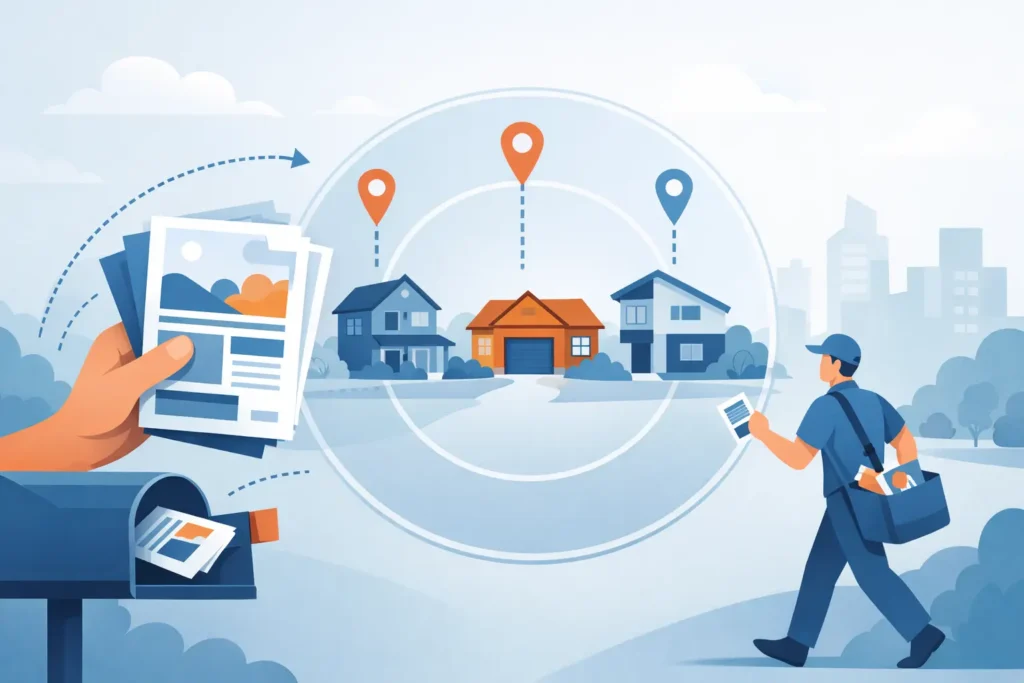
If you are paying to print 5,000 leaflets, you do not want them handed out at random. You want them through the right doors – the households most likely to need your service, respond to your offer or remember your name later. That is usually what people mean when they ask, can flyers reach specific households? The short answer is yes, but only up to a point, and the detail matters.
Leaflet marketing can be highly targeted when the campaign is planned properly. It works best when you think in terms of areas, property types, buying intent and delivery format, rather than imagining a list of named residents and exact addresses. For most local businesses, that level of targeting is more than enough to make print advertising practical and cost-effective.
Yes, flyers can reach specific households when you define “specific” in a realistic way. In door-to-door marketing, the strongest targeting usually comes from postcode sectors, individual streets, estates, villages, housing types and local catchment areas. That gives you control over where your material goes, even if you are not selecting one named household at a time.
For example, a window company may want owner-occupied estates with older housing stock. A takeaway may want dense residential areas within a tight delivery radius. A nursery may want family-heavy neighbourhoods close to its site. In each case, the targeting is specific enough to avoid wasted coverage, but broad enough to make distribution efficient and affordable.
That distinction matters. If your expectation is that leaflet distribution should work like paid social ads with personal data behind it, you will judge it unfairly. Print targeting is geographical and practical. Used well, that is a strength, not a weakness.
A good campaign can narrow your audience by area, likely household profile and campaign timing. It can also avoid zones that are less relevant to your offer. That is why local service businesses often get good value from print. They do not need to reach everyone. They need to reach enough of the right homes.
What it cannot do, at least not in standard form, is guarantee that only one exact household type will receive your leaflet. You cannot fully filter by income, age, ownership status or personal buying behaviour in the same way a digital platform claims to. Even where data suggests an area is a strong fit, there will still be variation from one street to the next.
That is not a weakness unique to leaflets. Every advertising channel has spillover. The real question is whether the targeting is accurate enough to produce enquiries at a sensible cost. In many local campaigns, it is.
The first and most common method is postcode-based area selection. This lets you focus on parts of town that match your service area, budget and likely customer base. If you only cover selected parts of Peterborough and nearby postcodes, there is no commercial sense in paying for wider coverage.
The next layer is street-level planning. Some roads will suit your offer far better than others. Detached and semi-detached housing may suit trades and home improvement firms. Denser residential areas may suit food, discount retail, cleaning or local events. Campaign planning should reflect that.
Property type is often overlooked, but it can make a noticeable difference. A landscaping firm, for instance, is unlikely to want large volumes delivered to blocks of flats with no private gardens. A stairlift provider may want areas with older residents, while a children’s activity provider may lean towards family estates and school catchments.
Timing also affects targeting. A leaflet for a summer exterior cleaning service makes more sense in spring than in January. A Christmas menu promotion needs to arrive at the right point in the buying cycle. If your message reaches the right household too early or too late, response can drop even when the area itself is well chosen.
Finally, delivery format matters. Shared distribution can be cost-efficient when broad local reach is the goal. Solo distribution gives your brand more impact because your leaflet is not competing for attention with others on the doorstep. Which option works best depends on your budget, your margins and how strong your offer is.
This is where many campaigns either perform well or waste money. Coverage for its own sake is rarely the answer. If your business depends on local enquiries, then area choice should be based on practical commercial logic, not guesswork.
A distributor with proper knowledge of PE1 to PE7 can help identify areas that make sense for your service, not just areas that are easy to fill on a route plan. That could mean targeting newer estates for household services, established owner-occupied streets for renovation work, or selected residential pockets close to a venue for event promotion.
Broad campaigns do have their place. If you are building general awareness, launching a new business or promoting a mass-market offer, wider reach can work well. But if you need tighter cost control, specific household targeting is usually the better route. Fewer homes, better matched, often beats more homes with lower relevance.
There is another part of this question that businesses often mean without saying it directly. Can flyers reach specific households, and can you trust that they actually do?
That is not a small point. In leaflet distribution, targeting only works if the delivery is carried out as planned. If materials are meant to go to selected streets and the route is not followed properly, the campaign loses value immediately.
That is why reporting, route verification and clear planning matter. Reliable distribution is not just an operational detail. It is part of the targeting itself. A tightly planned campaign with poor delivery standards is still a poor campaign.
For businesses investing real money in print, accountability should be treated as standard, not as an extra. You need to know where your material is going, when it is being delivered and what area has been covered. Without that, you are relying on hope rather than process.
Flyers work especially well for businesses that sell to households within a defined local area. Trades, cleaning firms, estate agents, takeaways, fitness operators, childcare providers, dental practices and local events all tend to benefit when they can put a clear offer directly in front of nearby residents.
They are also strong when the message is simple. A discount, seasonal service, launch announcement, reminder or local brand introduction can all perform well in print. People do not need to click, search or scroll. The message arrives in the home.
They are less effective when the product is highly niche, the buying cycle is long and the target customer is too hard to identify geographically. In those cases, leaflets may still support awareness, but they may not be the only channel you rely on.
Start with the outcome, not the print run. If your goal is more roofing leads in selected areas, your campaign should be built around those streets and that service radius. If your goal is to promote a restaurant offer, focus on the households most likely to order and within practical distance.
Keep the message relevant to the area you are targeting. A leaflet that feels generic tends to get ignored. A leaflet that speaks to a local need, season or service problem stands a better chance. Clear offers, strong headlines and straightforward contact details still matter just as much as the delivery map.
It also helps to test. One area may outperform another even when they look similar on paper. One format may bring stronger response than another. Good campaign planning is not just about being targeted once. It is about learning where response is strongest and repeating what works.
That is where an experienced local provider such as PB Leaflet Distribution can add real value. Not by promising magic, but by helping businesses choose sensible coverage, reliable delivery and a campaign format that fits the objective.
So, can flyers reach specific households? Yes, when the campaign is built around the right areas, realistic targeting and dependable delivery. The businesses that get the best return are usually the ones that stop chasing blanket coverage and start focusing on the homes that actually matter.
Ready to plan your next leaflet campaign?
Get a Free Quote
Need door to door leaflet distribution near me? Learn how to choose a reliable local service, target the…
Read article
Flyer distribution vs direct mail: compare cost, targeting, reach and response so you can choose the right print…
Read article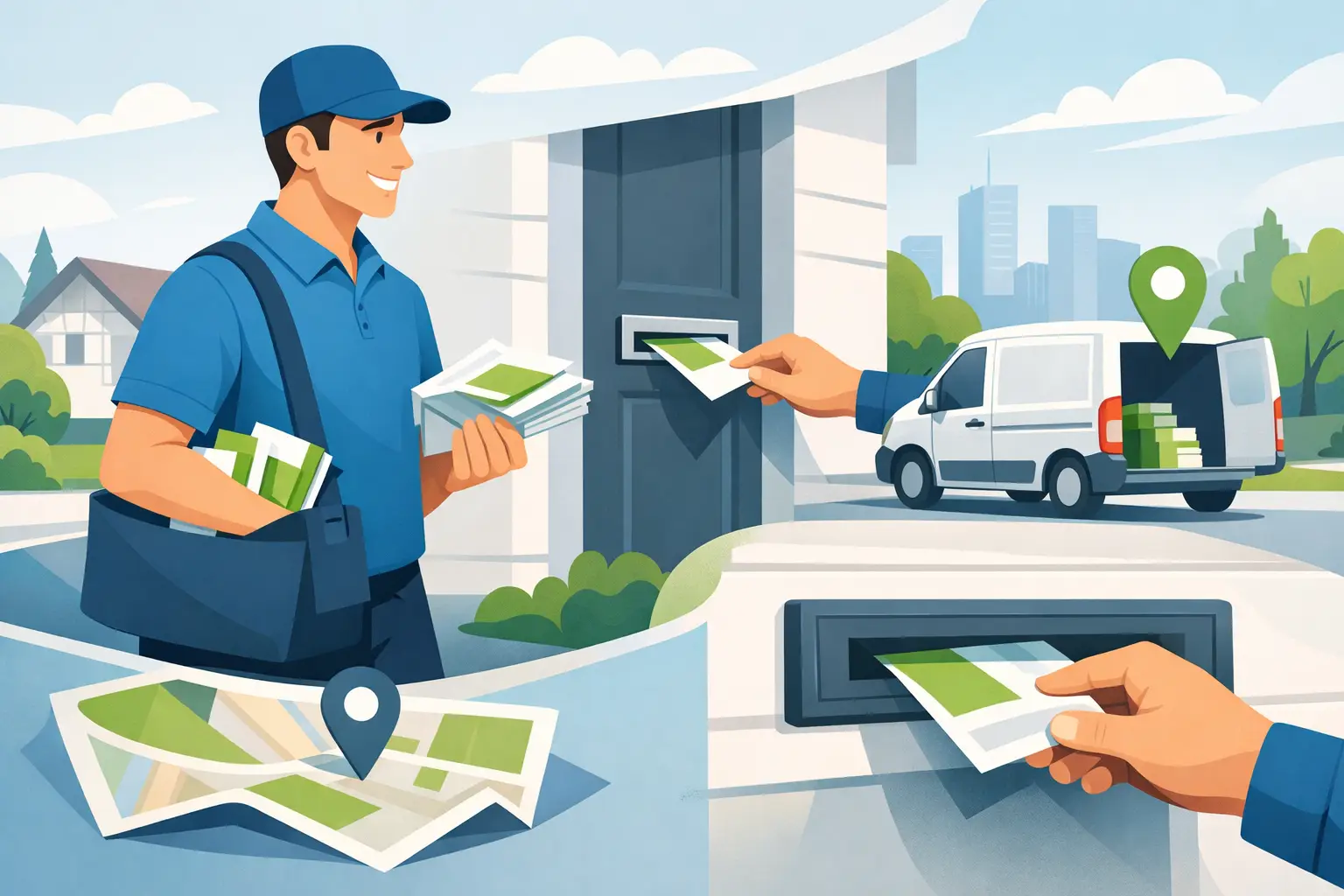
Leaflet distribution PE5 for businesses that need reliable local reach, targeted coverage and clear reporting to make every…
Read article