July 6, 2026
Flyer Distribution vs Direct Mail
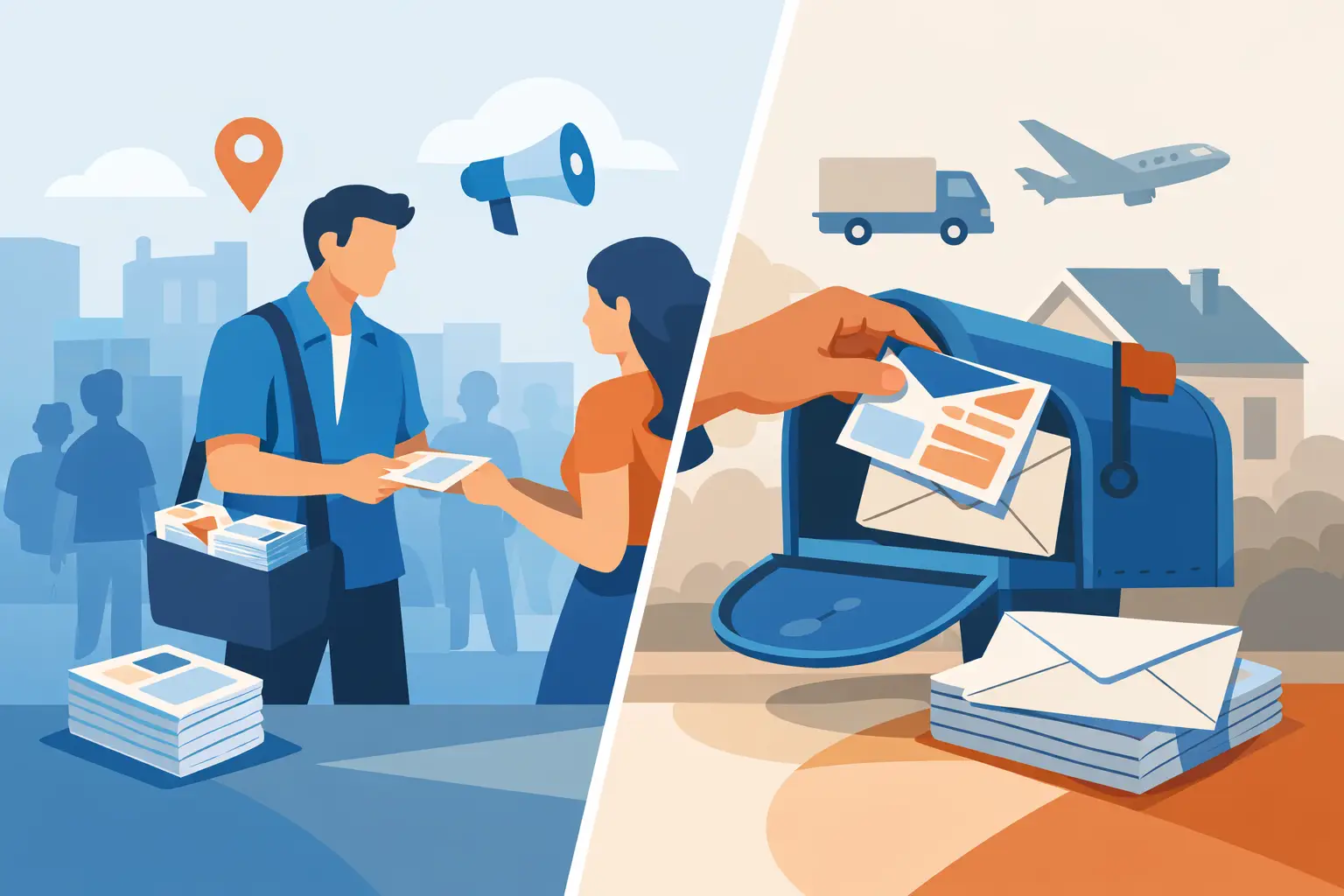
Flyer distribution vs direct mail: compare cost, targeting, reach and response so you can choose the right print…
Read article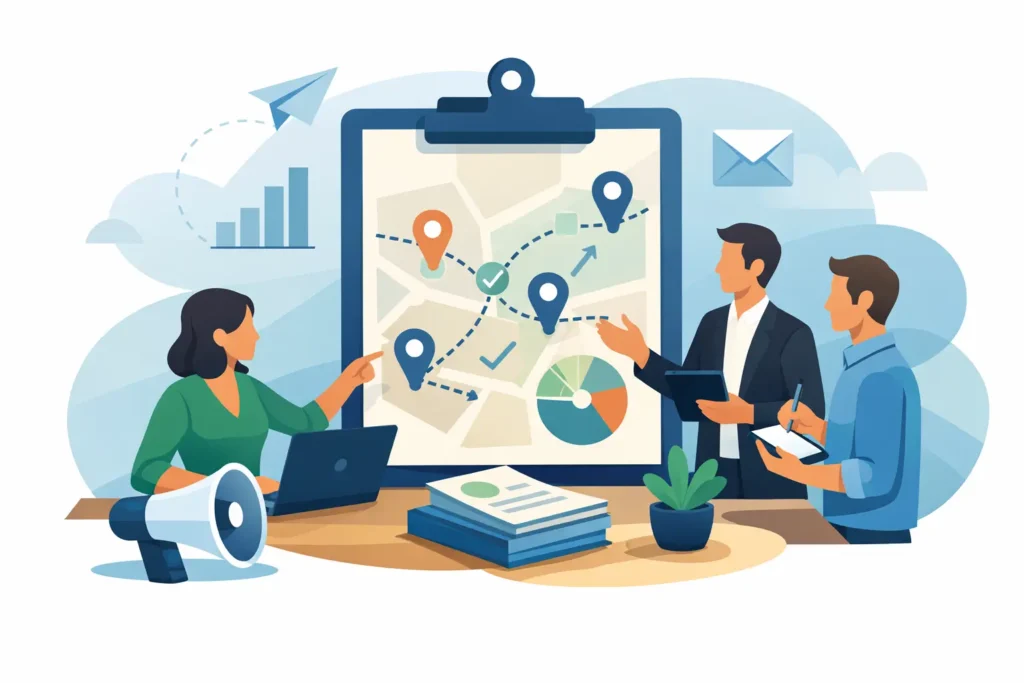
If you are paying for print, design and delivery, guessing is expensive. PE2 leaflet campaign planning works best when it starts with a clear commercial aim, a defined target area and a distribution method that matches the job. That sounds simple, but it is where most wasted spend happens.
PE2 covers a mixed customer base. Some streets suit household service businesses perfectly. Others are better for retail promotions, local events or brand awareness. Treating the whole postcode as one audience usually leads to average results. A better approach is to plan around who you want to reach, what action you want them to take and how often they need to see your message before responding.
A well-planned campaign is not just about getting leaflets through doors. It is about getting the right message to the right households in the right quantity and at the right time. For a local business, that means making practical choices before a single item is printed.
Start with the objective. If you are a trade business looking for booked jobs, your leaflet should push a clear service, offer or call to action. If you are opening a new location or promoting an event, coverage and timing may matter more than repeat exposure. The campaign changes depending on what success looks like.
That is why PE2 leaflet campaign planning should always begin with one question: what do you need this campaign to produce? Enquiries, bookings, footfall and awareness each need a slightly different approach. If you do not decide that at the start, it becomes much harder to judge whether the campaign has done its job.
PE2 is not one uniform market. It includes different housing types, neighbourhood densities and household profiles, and that affects how a leaflet campaign performs. A broad area plan can work for brand visibility, but many businesses get better value by narrowing their coverage to the streets most likely to respond.
For example, a window cleaner, gardener or domestic cleaning service will often do better by concentrating on residential areas where repeat custom is realistic and route efficiency matters. A takeaway launch, gym promotion or family event may benefit from wider household reach if the offer has broad local appeal. There is no universal best option. It depends on the business model.
Targeting by postcode sector is useful, but it should not be the only lens. Density, property type and travel distance to your service area all matter. If your team only works within a tight radius, there is little sense generating leads beyond it. If your service area is flexible, you may choose wider PE2 coverage to build volume.
One of the most common mistakes in leaflet marketing is deciding the quantity first and trying to make the campaign fit around it. That often leads to weak coverage or a scattergun approach. Quantity should come after area selection and campaign purpose.
If you want a localised test, a smaller run focused on carefully chosen streets can tell you more than a large untargeted distribution. If you are promoting a seasonal offer and need strong visibility fast, a larger volume may be justified. Neither is automatically right. The right quantity is the one that gives the campaign a fair chance to perform.
There is also the question of repeat activity. A single delivery can work, especially for urgent or time-sensitive offers, but many campaigns improve when households see the brand more than once. People often keep a leaflet until they need the service, and that means familiarity matters. Consistency usually beats a one-off burst, particularly for local services people buy as needed.
This is where planning gets more commercial. It is not only about what you can spend now. It is about whether you want immediate response, longer-term presence or both. A smaller repeated campaign can outperform one larger run if the message and area are well matched.
Format affects response, cost and visibility. Shared distribution is typically more cost-efficient and can make sense when you want broad household coverage without carrying the full cost of a solo campaign. For many local businesses, that is a sensible starting point.
Solo distribution gives your leaflet exclusive attention. That usually suits higher-value services, stronger offers or campaigns where brand presentation matters. If each new customer is worth a good margin, solo delivery may justify the higher spend because your message is not competing with other material.
The trade-off is straightforward. Shared distribution stretches budget further. Solo distribution increases prominence. The best choice depends on how valuable each response is to your business and how competitive your local market is.
Good timing can lift results without changing the leaflet itself. If your offer is seasonal, the campaign should land before the buying window, not in the middle of it. If your service tends to be booked around paydays, school terms or local events, use that pattern in your planning.
PE2 leaflet campaign planning should account for operational timing as well. If your business cannot handle a surge in calls next week, pushing a large campaign immediately may create more pressure than value. Marketing only works commercially when the business can convert the attention it generates.
That also applies to follow-up. If the leaflet includes a phone number, someone needs to answer. If it drives people to request a quote, the response process needs to be fast. A good campaign can still underperform if the business side is not ready.
Too many leaflets try to say everything. That usually weakens response. A better leaflet focuses on one main message and one clear next step. If you offer ten services, lead with the one most likely to get attention in that area. If you have a time-limited offer, make it obvious.
Clarity beats cleverness. Householders make quick decisions. They need to understand who you are, what you offer and why they should act now. Complicated layouts, vague wording and overcrowded design reduce the chance of response.
Keep the message commercial. Price-led offers can work well when competition is high, but they are not the only route. Trust signals, local availability, speed, reliability and convenience can be just as persuasive. The right angle depends on what your market cares about most.
If you cannot tell where enquiries came from, future planning becomes guesswork again. Campaign tracking does not have to be complicated, but it does need to be deliberate. Use a dedicated phone number if practical, ask every caller where they heard about you, or create a specific offer code for the leaflet.
What matters is consistency. The point is not to produce perfect attribution. It is to gather enough reliable feedback to improve the next campaign. Which area produced more calls? Did a solo distribution generate stronger lead quality? Did repeating the campaign lift response?
Over time, this is where leaflet marketing becomes more efficient. The first campaign gives you a starting point. The next one should be sharper because it is built on evidence rather than assumption.
In leaflet distribution, trust is a real commercial issue. Businesses are not just paying for print. They are paying for coverage in selected areas and expecting that delivery to happen as planned. If that part is uncertain, the rest of the campaign plan loses value quickly.
That is why verified routes and clear reporting matter. They help turn leaflet marketing from a hopeful exercise into a channel you can manage properly. For businesses investing in PE2 coverage, reliability is not an extra feature. It is the basis of whether the campaign deserves repeat budget.
PB Leaflet Distribution has built its service around that point for good reason. Businesses want targeted distribution they can rely on, not vague promises after the fact.
There are times when tight targeting is the right call. Local trades, estate agencies, child-focused services and neighbourhood offers often benefit from concentrated coverage. In these cases, a strong area match usually matters more than raw numbers.
There are also times when wider PE2 distribution makes more sense. New openings, broad consumer offers and brand awareness campaigns may need reach first, refinement later. If the message has broad relevance, wider coverage can create momentum.
The practical decision comes down to cost per response and customer value. If each new customer is worth a lot, tighter and more prominent delivery may be sensible. If the campaign depends on volume, wider distribution can be the better route.
The best PE2 leaflet campaign planning is rarely the flashiest. It is the campaign that matches area, quantity, timing and format to a clear business outcome, then gives you enough reporting to make the next decision with confidence. If you approach it that way, print becomes a dependable local marketing channel rather than a gamble.
Ready to plan your next leaflet campaign?
Get a Free Quote
Flyer distribution vs direct mail: compare cost, targeting, reach and response so you can choose the right print…
Read article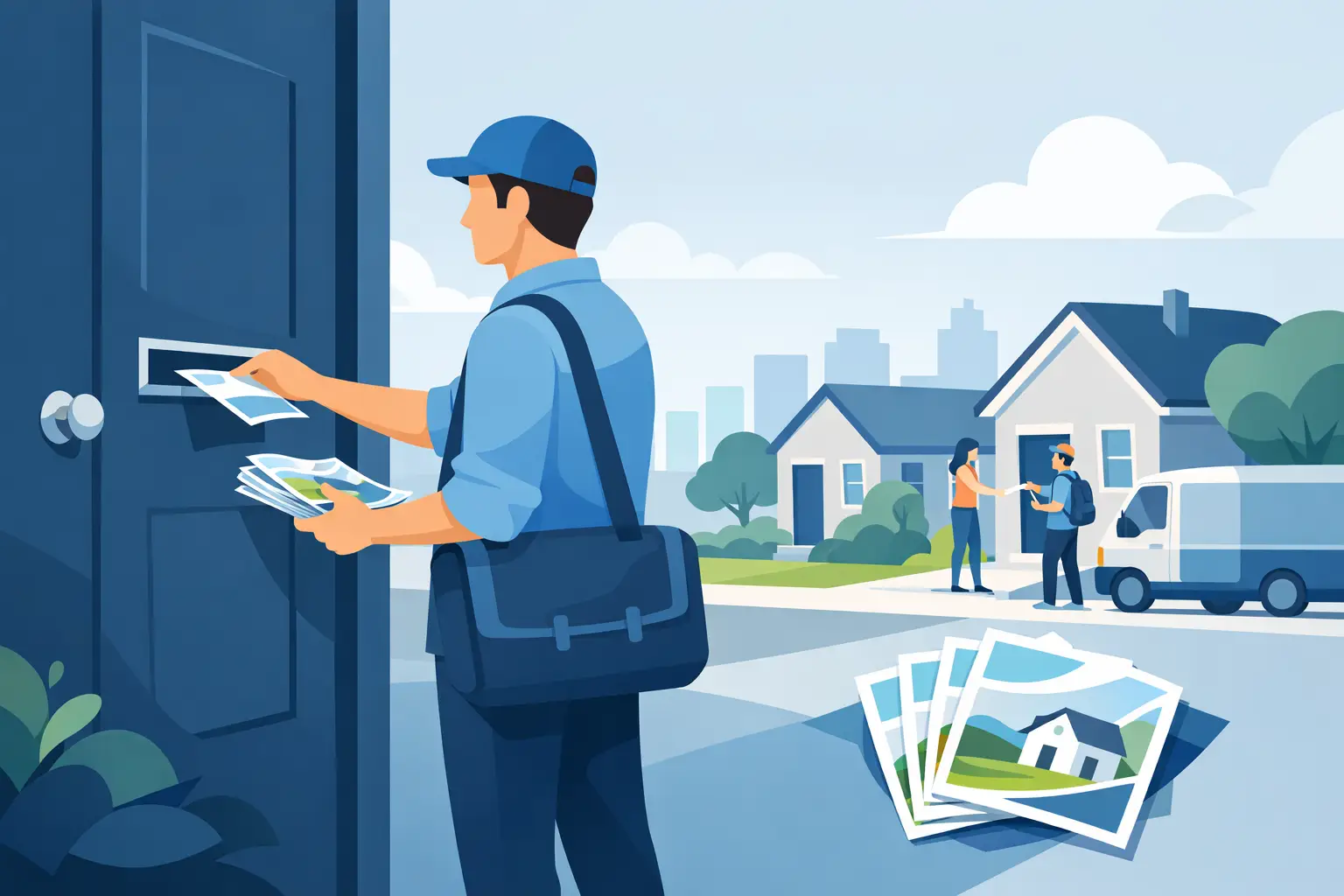
Door to door leaflet distribution can deliver strong local results when targeting, timing and delivery quality are planned…
Read article
Postcode targeted leaflet distribution helps local businesses reach the right homes, control spend and improve campaign results with…
Read article