July 3, 2026
Peterborough Menu Delivery Service That Works
Peterborough menu delivery service for takeaways, restaurants and food brands that want reliable local reach, better targeting and…
Read article
A leaflet campaign can look good on paper and still underperform once it reaches the street. Usually, the problem is not the print. It is the planning behind the door to door leaflet distribution. If the area is wrong, the quantity is guessed, or delivery cannot be verified, even a well-designed leaflet becomes a wasted cost.
For local businesses, that matters. You are not paying for vague exposure. You are paying to get your offer in front of households that are actually likely to respond. Done properly, leaflet distribution remains one of the most direct and cost-controlled ways to build awareness, generate enquiries and support local sales.
Digital advertising has its place, but it comes with its own problems. Costs can rise quickly, targeting can be broader than expected, and many businesses end up competing for the same attention on the same platforms. Print works differently. It puts your message physically into the home, where it can be read immediately, kept for later or passed on.
That direct presence is especially useful for trades, local services, takeaways, estate agents, healthcare providers, gyms, event organisers and new businesses entering an area. If someone needs a service now or in the near future, a leaflet can act as both introduction and reminder.
There is also a practical advantage. With door to door leaflet distribution, you can target by neighbourhood, postcode sector, housing type, campaign size and delivery format. That gives you more control over where your budget goes. Instead of trying to reach everyone, you can focus on the households that make the most commercial sense.
The strongest campaigns are rarely the biggest. They are the ones that align the right message with the right area at the right time.
A local plumbing company, for example, does not need blanket coverage across a wide region if most of its work comes from a handful of surrounding areas. A more efficient approach is to target neighbourhoods within a sensible travel radius, build repeat visibility there and track the level of response. The same applies to businesses promoting seasonal offers, new openings or limited-time services. Reach matters, but relevance matters more.
Creative also plays a part, though not always in the way people expect. A leaflet does not need to be clever for the sake of it. It needs to be clear. People should understand what you offer, who it is for and what they should do next within seconds. If the design is overloaded, the offer is weak or the call to action is buried, distribution alone will not rescue the result.
Timing can make a noticeable difference as well. A campaign for gardening services in early spring will perform differently from the same campaign in late autumn. A takeaway promotion often benefits from repeated local presence rather than a one-off push. A business launch may need concentrated delivery over a short period to create momentum. There is no single best schedule. It depends on the service, the area and the response you want.
Area selection is where many campaigns either become efficient or expensive. Broad coverage sounds attractive, but it can dilute your budget fast. If your service is strongest in certain neighbourhoods, or if your customer base tends to come from specific property types, those details should shape the plan.
In practical terms, that means looking at where your current customers are, how far you realistically want to travel, and whether the campaign is about lead generation, awareness or offer-driven response. A premium home improvement business may perform better in selected residential areas than in a mixed campaign covering every available street. A family-focused local attraction may want wider household reach across multiple postcode sectors.
For businesses targeting homes in and around Peterborough, local route knowledge matters. Postcode planning across areas such as PE1 to PE7 is more useful when it reflects actual delivery patterns and residential density, not just lines on a map. That helps avoid unrealistic quantity estimates and keeps campaign planning grounded in what can genuinely be delivered.
Distribution format affects both cost and visibility. Solo distribution gives your leaflet the full attention of the letterbox. It is often the stronger option for higher-value services, launches, event promotions or campaigns where you want maximum impact.
Shared distribution can be a more economical route when budget is tighter and the priority is broad household coverage. It lowers the cost per delivery, which can make sense for menu circulation, recurring promotions or awareness campaigns that benefit from volume.
Neither option is automatically better. It depends on the value of a new customer, the strength of your offer and how competitive your market is. If one customer is worth a substantial amount to your business, paying more for solo delivery may be entirely justified. If your aim is regular local presence at a controlled cost, shared delivery can be the sensible choice.
One of the biggest objections in this sector is simple: how do you know the leaflets were actually delivered?
That is a fair question. Businesses are investing in print, design and distribution, and they want proof that the campaign happened as agreed. Reliable delivery is not just part of the service. It is the service.
This is why route verification, transparent reporting and clear campaign planning matter so much. Without them, you are relying on assumption rather than accountability. A cheaper quote may look attractive at first, but if the delivery lacks oversight, the apparent saving can disappear quickly.
A dependable distribution partner should be able to explain how routes are allocated, how delivery is monitored and what reporting you can expect afterwards. That level of clarity gives you more confidence in the spend and makes it easier to assess performance honestly.
Not every leaflet response comes through a perfect tracking system. Some people call directly. Some keep the leaflet for weeks. Some search for your business later rather than using the printed contact details. Even so, campaigns can still be measured in practical ways.
Ask callers where they heard about you. Use a dedicated phone number if appropriate. Include a specific offer code, landing page name or simple campaign reference. Compare enquiry levels before, during and after delivery. If you are running repeat campaigns, watch for trends by area rather than judging everything from one week of activity.
The point is not to pretend leaflet marketing behaves exactly like digital reporting. It does not. The point is to gather enough evidence to see whether the campaign is driving the right kind of response at the right cost.
Poor results are usually tied to decisions made before the first leaflet goes out. Sometimes the targeting is too broad. Sometimes the quantity is too low to create proper coverage. Sometimes the offer is too vague, or the design asks too much of the reader. In other cases, the business expects immediate high response from a service that works better through repeated exposure.
There is also the issue of mismatch. A leaflet for an emergency electrician is judged differently from one for a luxury kitchen installer. One may generate quick calls from immediate need. The other may support a much longer decision process. Both can work, but the expectations and campaign structure should match the buying behaviour.
That is why no-nonsense planning matters more than grand promises. A realistic campaign built around the right households, sensible quantity and clear reporting will usually outperform a larger, less focused one.
A good campaign does not start with the question, how many leaflets can we afford? It starts with, where will this investment give us the best chance of response?
Once that is clear, the budget can be shaped around practical choices. You might reduce the coverage area and increase frequency. You might switch from shared to solo distribution for a more valuable audience. You might test one postcode sector first, then scale once response is proven.
This is often where experience pays off. Businesses that treat distribution as a planned local marketing channel tend to get more from it than those that treat it as a one-off print exercise. That is also why many firms choose established providers such as PB Leaflet Distribution when they want straightforward campaign planning backed by reliable delivery.
Door to door leaflet distribution still works when it is approached properly – with targeted areas, sensible format choices and delivery you can trust. If you want local visibility that reaches households directly, the best place to start is not with more noise, but with a smarter plan.
Ready to plan your next leaflet campaign?
Get a Free Quote
Peterborough menu delivery service for takeaways, restaurants and food brands that want reliable local reach, better targeting and…
Read article
Choosing door to door leaflet distribution companies? Learn what matters most - targeting, proof of delivery, pricing and…
Read article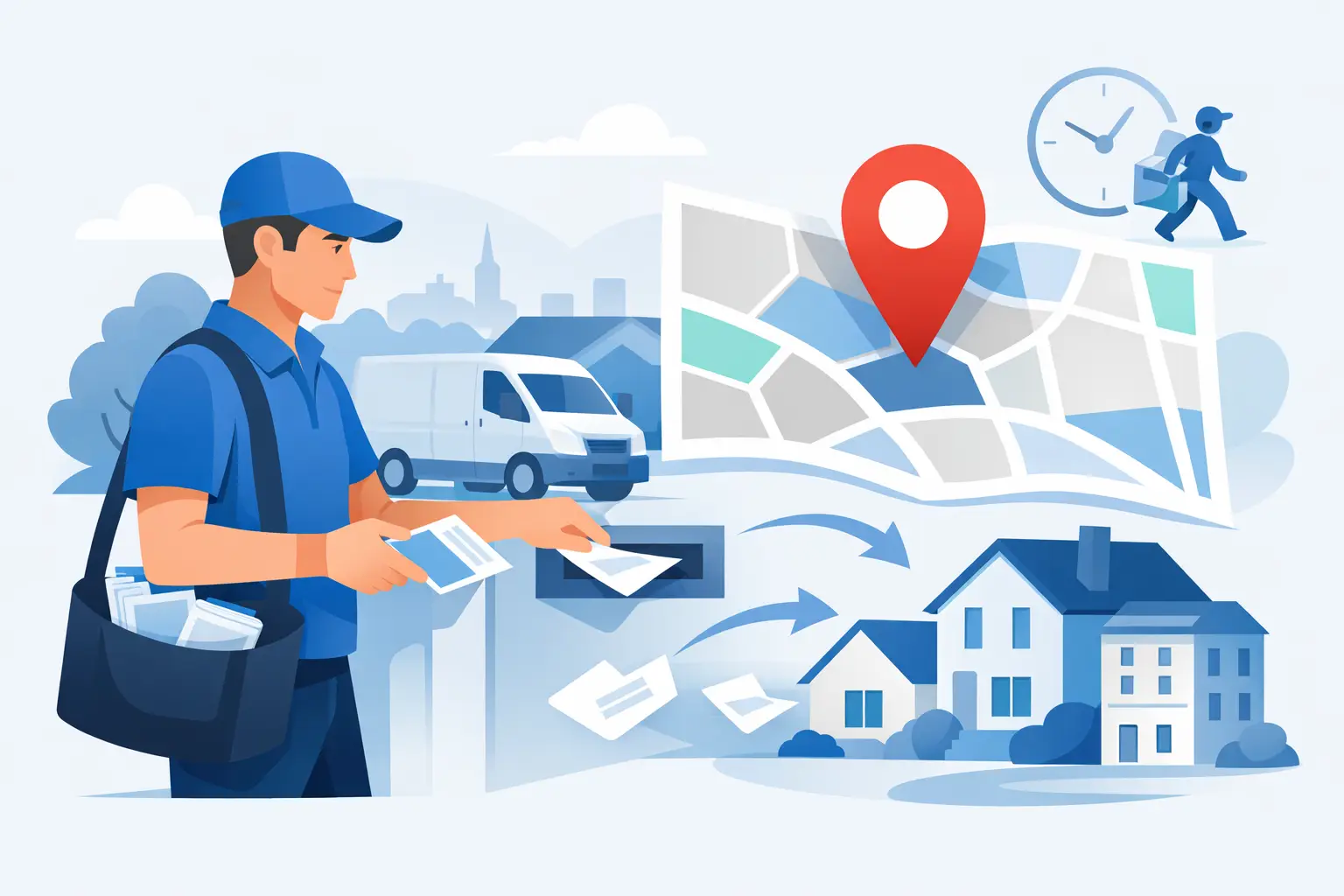
Leaflet distribution PE1 for businesses that want reliable local reach, targeted coverage and clear reporting from every campaign…
Read article