July 6, 2026
Flyer Distribution vs Direct Mail
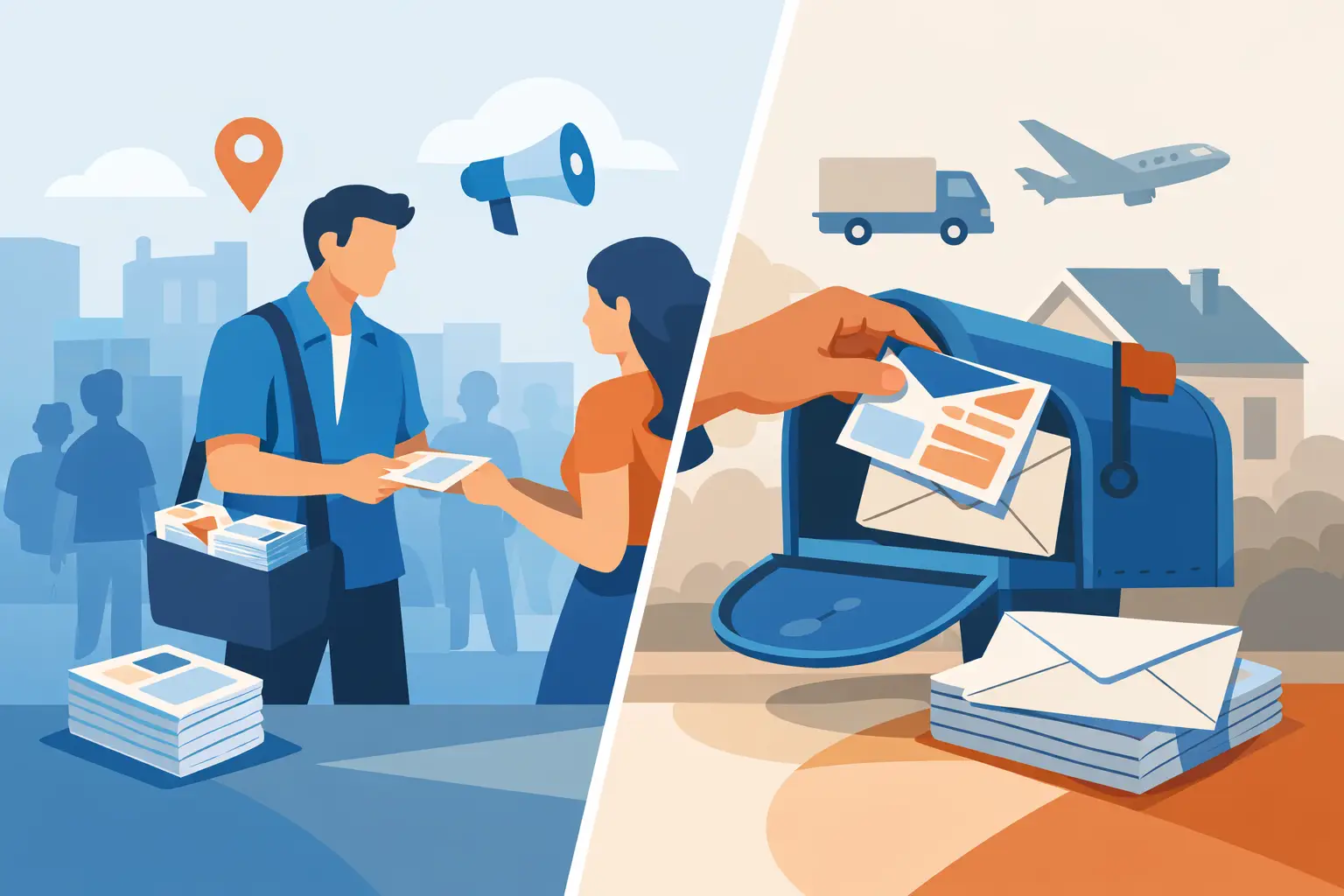
Flyer distribution vs direct mail: compare cost, targeting, reach and response so you can choose the right print…
Read article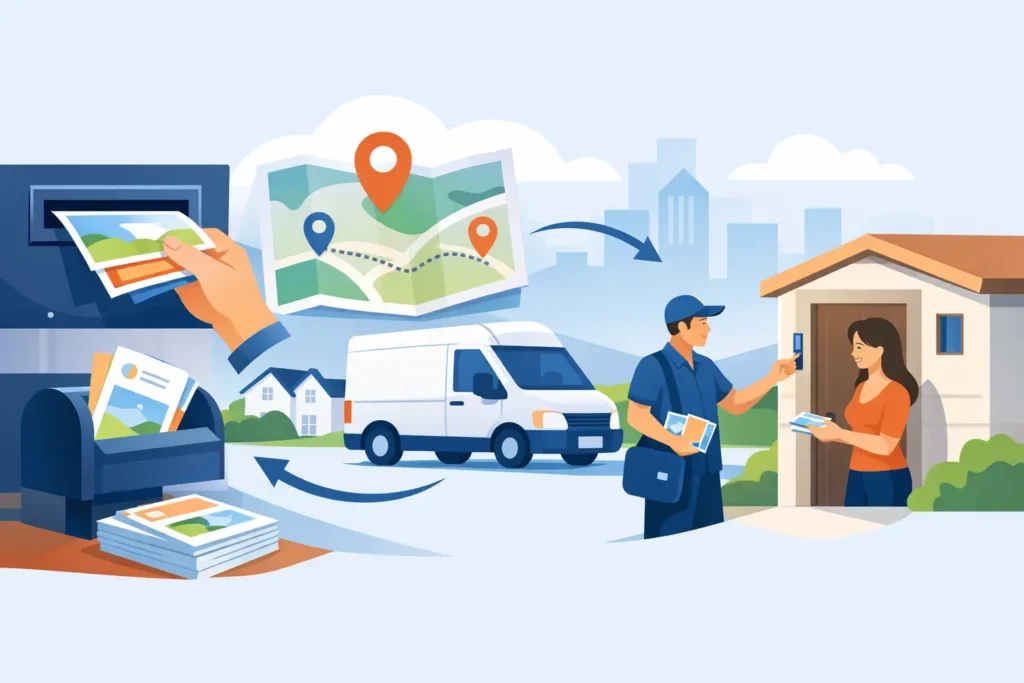
A leaflet campaign usually looks simple from the outside. You print your design, choose an area and wait for enquiries. But if you are asking how does leaflet distribution work, the real answer is that results depend on planning, targeting, delivery standards and proof that the job has actually been done.
For local businesses, that matters more than the leaflet itself. A strong offer can still underperform if it goes to the wrong streets, reaches too few households or lands at the wrong time. Good distribution is not just about getting paper through letterboxes. It is about matching your message to the right homes, in the right quantity, with a delivery method that suits your budget and campaign goal.
In practice, leaflet distribution works as a campaign process rather than a single task. It starts with deciding what you want the campaign to achieve. That might be more calls for a plumbing service, stronger local awareness for a new gym, or footfall for an event or opening offer.
Once the goal is clear, the next step is area selection. This is where local knowledge makes a difference. If you are a business serving specific neighbourhoods, there is little value in paying to reach households outside your working radius. A better approach is to focus on postcode sectors and residential areas that are realistic for your service area, customer type and budget.
After the area is chosen, quantity planning comes next. This is not just a case of printing as many leaflets as possible. The volume needs to reflect the number of properties in the selected area and whether you want a one-off push or repeated coverage. Some campaigns work best with broad reach in one hit. Others improve with repeated distribution over several weeks because familiarity builds response.
Then comes the delivery model itself. This is where businesses usually choose between shared distribution and solo distribution. Shared distribution is the lower-cost option because your leaflet goes out alongside other marketing materials. Solo distribution gives your leaflet the full attention of the household at the point of delivery, which can improve visibility but costs more. Neither option is automatically better. It depends on your margin, your offer and how competitive your sector is.
The first part is targeting. If a campaign is not reaching the right households, everything else becomes less effective. A local tradesperson, for example, may want owner-occupied residential areas within a tight radius. A takeaway opening may want wider coverage nearby. A family event may need areas with a strong volume of households rather than a narrow income profile. The right area depends on who is most likely to respond.
The second part is the leaflet itself. Distribution can only do so much if the leaflet is unclear, cluttered or missing a direct reason to act. People decide quickly whether to keep something or bin it. Strong leaflets usually have one main message, an obvious service or offer, clear contact details and a simple call to action. Too much text often weakens response.
The third part is timing. Some campaigns are tied to seasons, school terms, local events or urgent service demand. Others need repeated delivery to stay visible. If you only distribute once in a highly competitive market, you may get some response, but repeated contact often improves trust and recall.
The fourth part is reliability. This is where many businesses become cautious, and rightly so. Print and design cost money. If distribution is not properly managed, the whole campaign is at risk. That is why route verification and transparent reporting matter. You need to know not just where your campaign was meant to go, but where it was actually delivered.
Most campaigns come down to a practical choice between cost efficiency and impact.
Shared distribution is often the right fit for businesses that want broad local exposure at a controlled cost. It can work well for general awareness, local offers and services with repeat marketing plans. If your aim is to stay visible in an area and keep your name in front of households, shared delivery can be a sensible option.
Solo distribution suits campaigns where response value is higher and visibility matters more. If one new customer is worth a strong return, paying more for standalone delivery can make commercial sense. It is also useful when you do not want your leaflet competing for attention with others.
Postcode-targeted campaigns are especially useful when your service area is defined and local. Rather than wasting stock across a wide patch, you can focus delivery on the neighbourhoods that are most relevant. For businesses working across parts of Peterborough and surrounding postcode sectors, this kind of targeting helps control spend while keeping the campaign tightly aligned to where enquiries can realistically be converted.
Before booking a campaign, it helps to ask a few practical questions. Which areas are being covered? How many homes are included? Is the campaign shared or solo? What reporting is provided? How is delivery checked? These are not awkward questions. They are the basics.
A dependable distributor should be able to explain the route plan clearly and keep the process straightforward. If the answers are vague, that is usually a warning sign. Businesses are not paying for guesswork. They are paying for targeted local exposure and need confidence that their materials are being handled properly.
It is also worth being realistic about expected response. Leaflet distribution can be highly effective, but performance varies by offer, area, design, timing and frequency. A strong local service with a clear offer may get quick results. A brand awareness campaign may take more than one round before momentum builds. Good planning improves your chances, but no honest provider should pretend every campaign performs the same way.
Leaflet distribution has one obvious challenge compared with digital advertising. You cannot log into a dashboard and watch every delivery happen live. That is why trust is such a decisive factor in this sector.
Businesses need more than a promise. They need a provider with established routes, a clear process and reporting that gives confidence the campaign has been completed as agreed. That does not mean overcomplicating the service. It means running campaigns properly, communicating clearly and giving clients a sensible level of accountability.
For local firms investing in print, this can be the difference between treating leaflet distribution as a repeatable marketing channel or writing it off after one poor experience. Reliable delivery turns print into a measurable local activity. Unreliable delivery turns it into a gamble.
Leaflet distribution tends to work best when the offer is local, relevant and easy to act on. Trades, home services, fitness businesses, estate-related services, food businesses, childcare providers and event promoters often perform well because the message is immediately useful to the household receiving it.
It also works well when the targeting is tight. If you can identify the areas most likely to need your service and match that with sensible volume, the campaign becomes more efficient. Blanket coverage can still have a place, but targeted campaigns usually make better use of budget.
Repeated campaigns often outperform one-off efforts. That is not because the first round failed. It is because recognition matters. A resident may not need your service today, but if they have seen your name two or three times, they are more likely to remember it when they do.
One common mistake is choosing area size by budget alone. If the budget is spread too thinly, the campaign may reach too few homes to make an impact. Another is overloading the leaflet with too many services or mixed messages. If the reader cannot tell what you want them to do, response drops.
Timing can also be mishandled. A campaign promoting a seasonal service too late in the cycle loses momentum before it starts. Equally, a good campaign can underperform if delivered once and then abandoned before the brand has had time to settle in the area.
The biggest mistake, though, is treating distribution as an afterthought. Businesses often put time into design and print, then spend too little time checking how delivery will be managed. The delivery stage is not admin. It is the part that determines whether the campaign reaches real households or not.
For businesses that want direct access to local homes, leaflet distribution remains a practical and proven option. Done properly, it gives you control over area, volume, timing and cost – and that makes it far more than just printed paper through letterboxes. It becomes a straightforward local marketing channel that can be planned, tracked and improved with each campaign.
Ready to plan your next leaflet campaign?
Get a Free Quote
Flyer distribution vs direct mail: compare cost, targeting, reach and response so you can choose the right print…
Read article
Peterborough menu delivery service for takeaways, restaurants and food brands that want reliable local reach, better targeting and…
Read article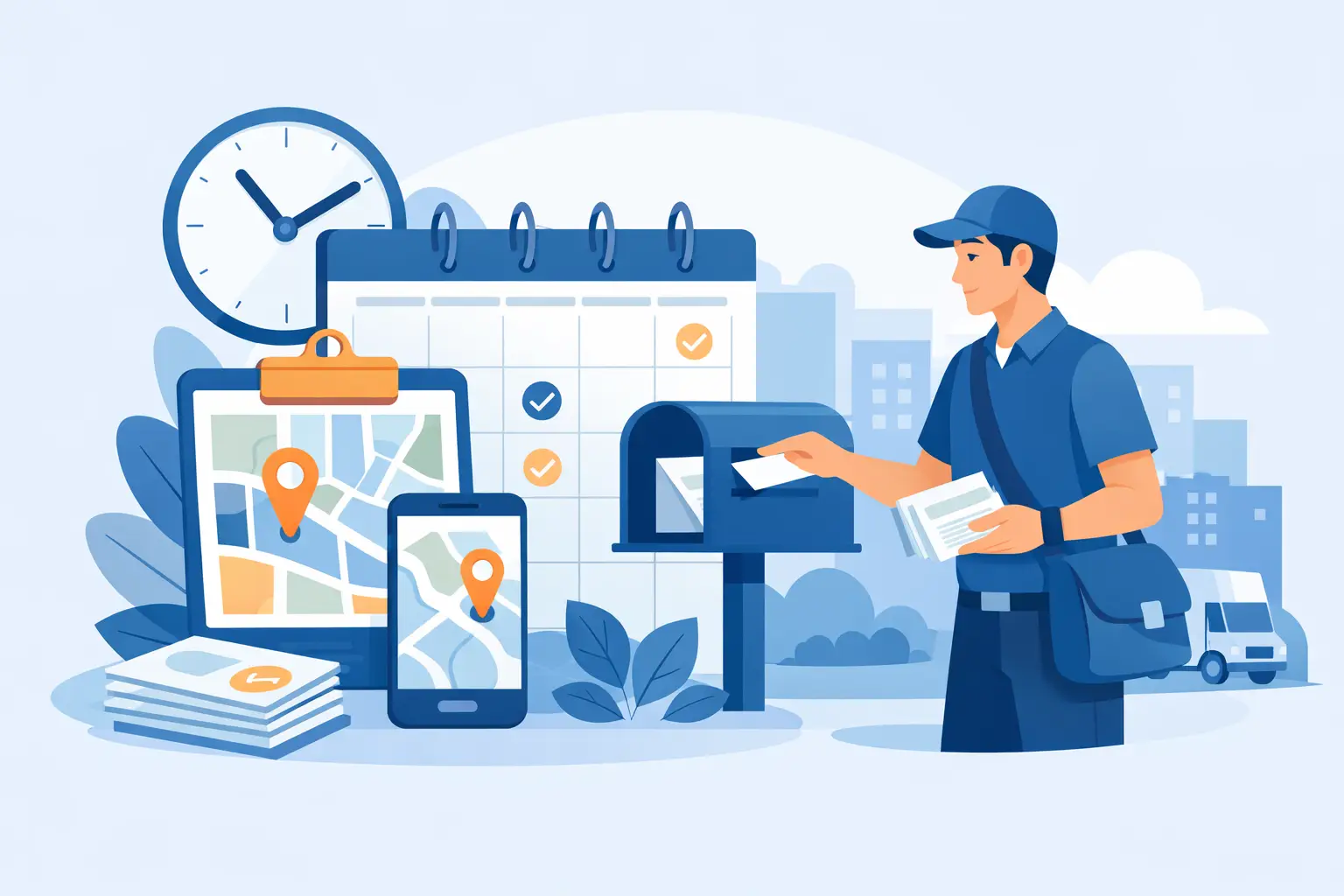
Learn when to book leaflet distribution for better timing, coverage and response. Plan ahead for launches, offers, events…
Read article