May 24, 2026
9 Shared Leaflet Distribution Benefits
Learn the key shared leaflet distribution benefits, from lower costs to stronger local reach, and see when this…
Read article
If you want more enquiries from local households, leaflet distribution PE4 gives you a straightforward way to reach them without wasting budget on people outside your trading area. For many businesses, that matters more than broad reach. You do not need everyone to see your offer. You need the right homes, in the right streets, at the right time.
PE4 covers a broad mix of residential areas, which makes targeted print marketing useful when you want to build awareness locally or drive a quick response. A plumbing firm looking for work close to base, a takeaway promoting a midweek offer, or an estate agent pushing valuations all need slightly different coverage. The best campaigns are planned around that reality, not around a one-size-fits-all print run.
Good local marketing is not about chasing every channel. It is about choosing the channel that suits the job. When you need to reach households directly, print remains effective because it puts your message physically in front of the people you want to hear from.
Digital advertising has its place, but it also comes with waste. Clicks from outside your area, rising costs and limited attention can all reduce value. A well-planned leaflet campaign in PE4 is simpler. You pick the area, set the quantity, choose the format and put an offer in front of local residents. That is especially useful for businesses selling services that depend on location, such as cleaning, roofing, removals, childcare, landscaping or home improvements.
There is also a trust factor. People still respond to printed marketing when it looks professional, arrives in the right area and speaks to a real local need. A leaflet can sit on a kitchen counter for days. A digital advert often disappears in seconds.
Not every leaflet campaign performs well. The difference usually comes down to planning. If the area is wrong, the design is vague or the delivery is unreliable, response will suffer. If those basics are right, print can produce strong value at a predictable cost.
The first question is whether PE4 matches your service area. That sounds obvious, but it is where many campaigns go wrong. If you only serve certain parts of Peterborough or if your team can only handle work within a short travel radius, your distribution should reflect that. Covering more homes is not always better if it brings in leads you cannot serve efficiently.
The second question is what you want the campaign to do. There is a big difference between building brand recognition over time and generating immediate calls for a seasonal offer. A longer-term awareness campaign may suit repeated distribution across selected rounds, while a short promotional push may need heavier concentration in a smaller area.
The third factor is format. Shared distribution can be a cost-effective option when you want broad local reach without the higher spend of a dedicated campaign. Solo distribution gives your leaflet the full attention of the household and tends to suit businesses where each response is worth more. There is no universal answer. It depends on budget, competition and the value of a customer to your business.
One of the biggest mistakes in local print marketing is assuming quantity guarantees results. It does not. Ten thousand leaflets in the wrong places can perform worse than a smaller, better-targeted campaign.
In PE4, street selection should reflect the type of customer you want. A family-focused offer may suit dense residential areas. A premium service may need a more selective approach. A local event may benefit from distribution close to the venue and in neighbouring catchments where attendance is realistic. Good targeting improves response and keeps cost under control.
That is one reason local knowledge matters. Understanding how neighbourhoods are laid out, where housing density changes and how best to structure a route can make a real difference to campaign efficiency.
In leaflet distribution, trust is a commercial issue. If your materials are not delivered properly, the design, print and offer stop mattering. You have still paid for them, but the campaign has lost its chance to work.
That is why businesses buying leaflet distribution in PE4 should care about route verification and reporting, not just price. Cheap distribution can become expensive very quickly if it leads to poor coverage, patchy delivery or no accountability at all.
A dependable service should be clear about where your leaflets are going, how the route is planned and what reporting is available after the campaign. That gives you more confidence when judging results and deciding what to do next. If a particular area performs well, you can repeat it. If another area underperforms, you can adjust. Without transparency, you are guessing.
PB Leaflet Distribution has built its service around that point for a reason. Businesses want evidence that campaigns are being carried out properly, especially when they are investing in local exposure to generate leads.
There is no single best distribution model for every business. The right option depends on your objective and budget.
Standard door-to-door distribution suits many local campaigns because it gives you direct access to households in a chosen area. It is practical, scalable and easy to align with local targeting. For firms that need a stronger presence or have a higher-value service, solo distribution can be the better fit because your leaflet is delivered on its own rather than alongside other material.
Shared distribution is often a sensible choice when cost is a bigger factor and the aim is reach rather than exclusivity. It can work well for general promotions, takeaway menus, event advertising and brand awareness campaigns where repetition is more important than premium placement.
Postcode-targeted campaigns are especially useful in PE4 when you want tighter control over geography. Rather than casting a wide net, you can focus spend where it is most likely to convert. That keeps planning cleaner and makes response easier to assess.
Timing is often underestimated. A strong leaflet delivered at the wrong moment can still miss. Seasonal trades know this already. Garden services gain traction in spring. Boiler and heating promotions usually perform better before cold weather sets in. Back-to-school offers, Christmas promotions and January sales all have their own windows.
Even outside seasonal sectors, timing can affect response. A campaign tied to a launch, local event or limited-time offer needs delivery to be organised properly. If the materials arrive too early, the urgency fades. Too late, and the opportunity has passed.
The most effective leaflets are usually the simplest. Clear headline, obvious offer, strong local relevance and a direct next step. People should know within seconds what you do, why it matters and how to respond.
Too much text weakens performance. So does vague branding with no reason to act. If you are offering a service, show the benefit plainly. If you are running a promotion, make the saving easy to understand. If you want calls, put the number where people can see it quickly. A leaflet is not a brochure. It is a prompt to act.
It also helps to think beyond one round. Response from print is often strongest when households see your business more than once. That does not mean every campaign needs repeated drops, but if PE4 is a priority area for your business, consistency usually outperforms one-off activity.
There are trade-offs, of course. A single larger campaign may suit a short-term push. A phased campaign may be better if you want to test areas, manage workload or spread budget over time. The practical answer depends on what success looks like for your business.
Before any campaign goes ahead, you should be clear on four points: where your leaflets are going, how many homes you are targeting, what distribution format you are using and when delivery is due to take place. If any of that is unclear, ask the question before you commit.
You should also be realistic about results. Leaflet distribution is measurable, but it is not magic. Response rates vary by sector, offer, design, timing and area. The value comes from putting your message in front of local households in a controlled, reliable way, then improving the next campaign based on what you learn.
For businesses that need a dependable route into homes across PE4, that level of control is exactly the point. You are not buying vague awareness. You are buying planned local coverage with a commercial purpose.
If your next campaign needs to reach the right households rather than just more screens, PE4 is an area where targeted print can still do the job properly.
Ready to plan your next leaflet campaign?
Get a Free Quote
Learn the key shared leaflet distribution benefits, from lower costs to stronger local reach, and see when this…
Read article
Leaflet distribution PE5 for businesses that need reliable local reach, targeted coverage and clear reporting to make every…
Read article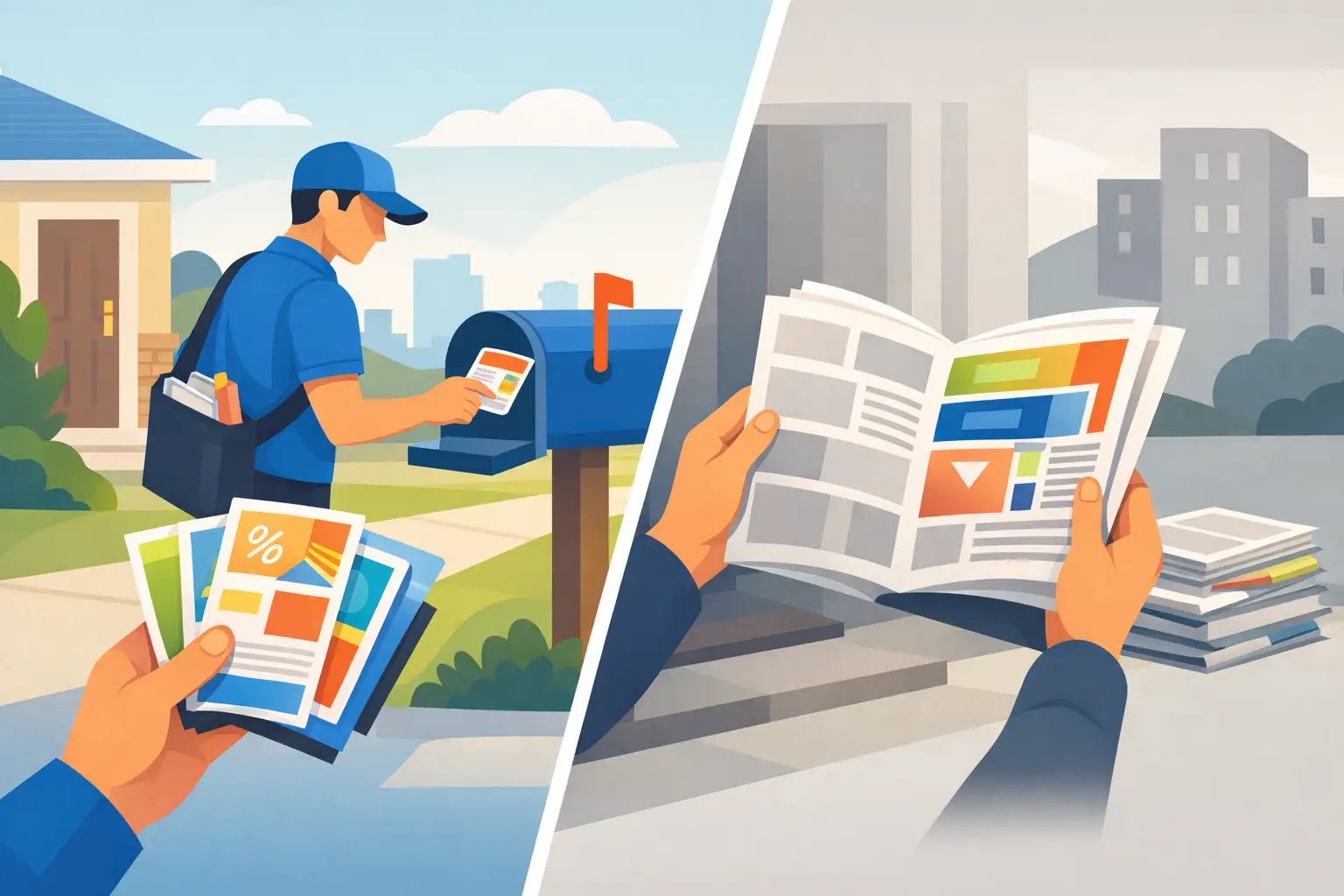
Flyer delivery vs newspaper inserts - compare targeting, cost, visibility and response to choose the right print marketing…
Read article