
July 10, 2026
10 Best Leaflet Design Tips That Work
Use these best leaflet design tips to create clear, persuasive print that gets noticed, builds trust and drives…
Read article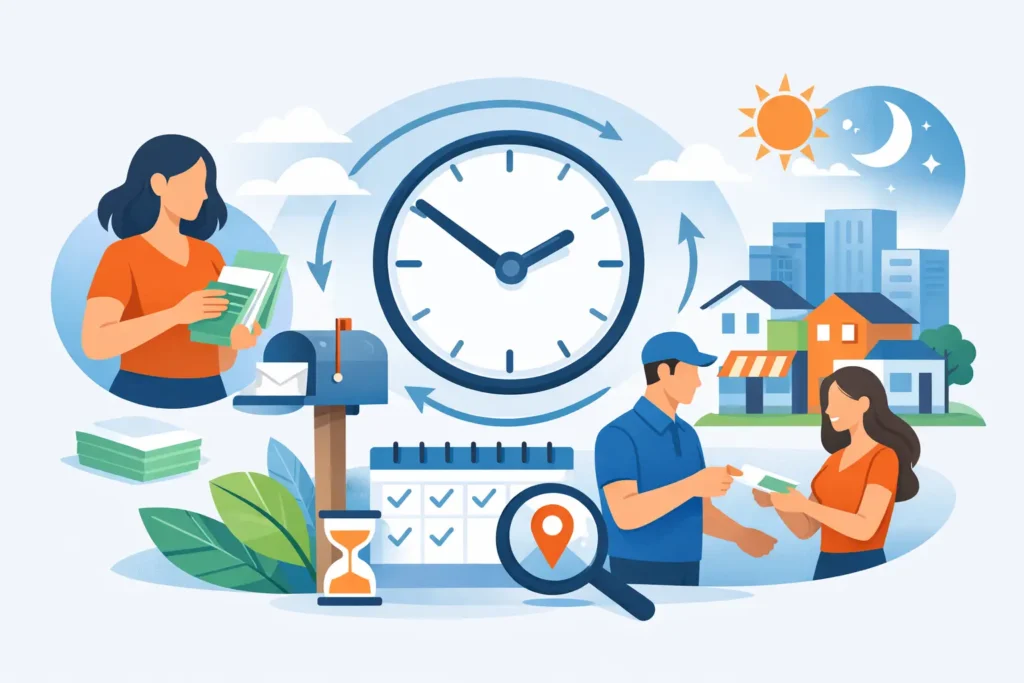
A leaflet through the door is not a one-day advert. It may be seen that evening, put on the kitchen side for the weekend, or kept until a household needs exactly what you offer. So, how long do leaflet campaigns last? For most local businesses, the strongest response period is usually the first one to four weeks after distribution, but the awareness created by a well-targeted campaign can continue working for months.
The more useful question is not simply how long a leaflet remains in a home. It is how long it takes your target customer to have a reason to act. A plumber, cleaner, restaurant, estate agent or home improvement company will all see different response patterns because household needs arise at different times.
A time-sensitive offer can generate calls within days. If you are promoting a grand opening, an event, a seasonal menu or a limited booking window, most enquiries should arrive shortly after delivery. In these cases, the leaflet needs a clear deadline and a simple way to respond.
For services people buy only when they need them, the campaign has a longer tail. A resident may receive your leaflet in March but call in June when their boiler fails, their garden needs attention or they finally decide to redecorate. The leaflet has already done its job by putting your name in front of them before the need arises.
Brand awareness lasts longer still. Repeated, consistent distribution across the same postcode areas makes a business familiar. When residents see the same company name, service and contact details more than once, they are more likely to recognise it and trust it when they are ready to enquire. That is why a single campaign can bring enquiries, while a planned sequence is more likely to build dependable local demand.
The first week is normally where immediate-response campaigns show their value. Households are most likely to notice a new offer, compare prices, visit a website, save a phone number or mention it to someone else during this period.
Weeks two to four often produce the more considered enquiries. These are customers who have held onto the leaflet, checked their budget, discussed the purchase at home or waited until they had time to make contact. Higher-value services, such as roofing, landscaping, renovations or professional services, can take longer because the decision is less impulsive.
After the first month, direct response usually slows. That does not mean the campaign has failed. It means the leaflet is moving from an immediate prompt to a reminder. A strong design with a clear business name, service description and phone number can continue producing occasional leads well after delivery.
The exception is a leaflet built around a date that has passed. Once an event, sale or booking deadline is over, its practical lifespan ends quickly. For this type of campaign, distribution timing is as important as the design itself.
The offer has the biggest influence. A compelling, relevant offer gives residents a reason to respond now, while a general brand advert may take longer to convert. Neither approach is wrong. The right choice depends on whether you need immediate bookings or want to become known in a particular area.
Frequency matters too. One delivery introduces your business. A second or third delivery helps people remember it. Local marketing works because households do not make every purchasing decision the first time they see a company. Repetition is particularly useful for businesses with regular capacity to fill, such as beauty services, food businesses, fitness providers, cleaners and tradespeople.
Targeting also affects results. A campaign sent to the right households has a longer useful life because the service is relevant to the people receiving it. A family-focused offer, for example, may perform better in residential areas with the right household profile than across a broad, mixed area. Postcode planning should reflect your service radius, typical customer value and ability to handle new enquiries.
The leaflet itself can either extend or shorten its value. A busy design, vague message or tiny contact details can be forgotten quickly. A straightforward leaflet with one clear message, a visible call to action and contact details that are easy to find is more likely to be kept. If you have a strong customer review, guarantee, price indication or before-and-after result, use it where it supports the decision to contact you.
For many local businesses, repeating a campaign every four to eight weeks is a sensible starting point. It gives residents time to see the first leaflet and keeps your business visible without feeling excessive. The ideal interval depends on your industry, budget and how quickly you can follow up enquiries.
A seasonal business may work to a more focused schedule. Garden services can build momentum ahead of spring and summer, while heating, insulation and repair services may benefit from activity before colder weather. Event promoters need delivery close enough to the event to create urgency, but early enough for people to make plans.
For ongoing services, consistency usually beats a one-off large distribution. A smaller, well-targeted campaign repeated in selected postcode sectors can be easier to measure and improve than sending a large quantity once and hoping for a lasting result. It also lets you adjust the offer, area or quantity based on the enquiries received.
There is a trade-off. Repeating too soon can waste budget if the same households have not had enough time to act, particularly for higher-cost services. Waiting too long can mean losing the familiarity built by the first campaign. A practical schedule should match the buying cycle of your service rather than follow a fixed rule.
A campaign should be measured over a realistic period. For a fast offer, track calls, online enquiries and bookings for at least four weeks. For services with a longer decision cycle, keep tracking for two or three months. Ask every new enquiry how they heard about you, and record the answer rather than relying on memory.
Use a dedicated offer code, a campaign-specific phone number or a simple instruction such as quoting the leaflet when booking. This makes it easier to connect enquiries to a particular area and delivery date. You do not need complicated reporting to learn what is working. You need consistent records.
Look beyond the number of calls. A campaign that produces fewer enquiries but better-value jobs may be more profitable than one that creates a high volume of price shoppers. Consider the cost of printing and distribution against revenue, profit, repeat custom and referrals generated from the customers acquired.
Reliable delivery is part of this process. If you do not know where or when materials were distributed, it is difficult to judge response fairly. Verified routes and transparent reporting give you a clear starting point for tracking the campaign and planning the next one.
Keep your message consistent across repeat campaigns. You can refresh the offer or image, but do not change your business identity, core service or contact details every time. Familiarity is built through recognition.
It also helps to give people a reason to keep the leaflet. A seasonal checklist, useful local offer, price guide, booking reminder or time-limited incentive can make it more likely to stay visible. The key is relevance, not gimmicks. A household should quickly understand what you do, where you work and why they should contact you.
For businesses targeting PE1 to PE7, area-by-area planning can prevent budget being spread too thinly. Start where you can serve customers efficiently, assess the quality of response, then build outward. PB Leaflet Distribution can support this approach with targeted distribution choices based on the areas and campaign format that suit your objectives.
A leaflet campaign lasts longest when it arrives in the right home, carries a message worth remembering and is repeated before your business fades from view. Plan for the response you need now, but give your local reputation enough time and consistency to grow.
Ready to plan your next leaflet campaign?
Get a Free Quote
Use these best leaflet design tips to create clear, persuasive print that gets noticed, builds trust and drives…
Read article
Leaflet campaign case study for trades - see how targeted delivery, timing and area planning can turn print…
Read article
Leaflet distribution PE1 for businesses that want reliable local reach, targeted coverage and clear reporting from every campaign…
Read article