June 4, 2026
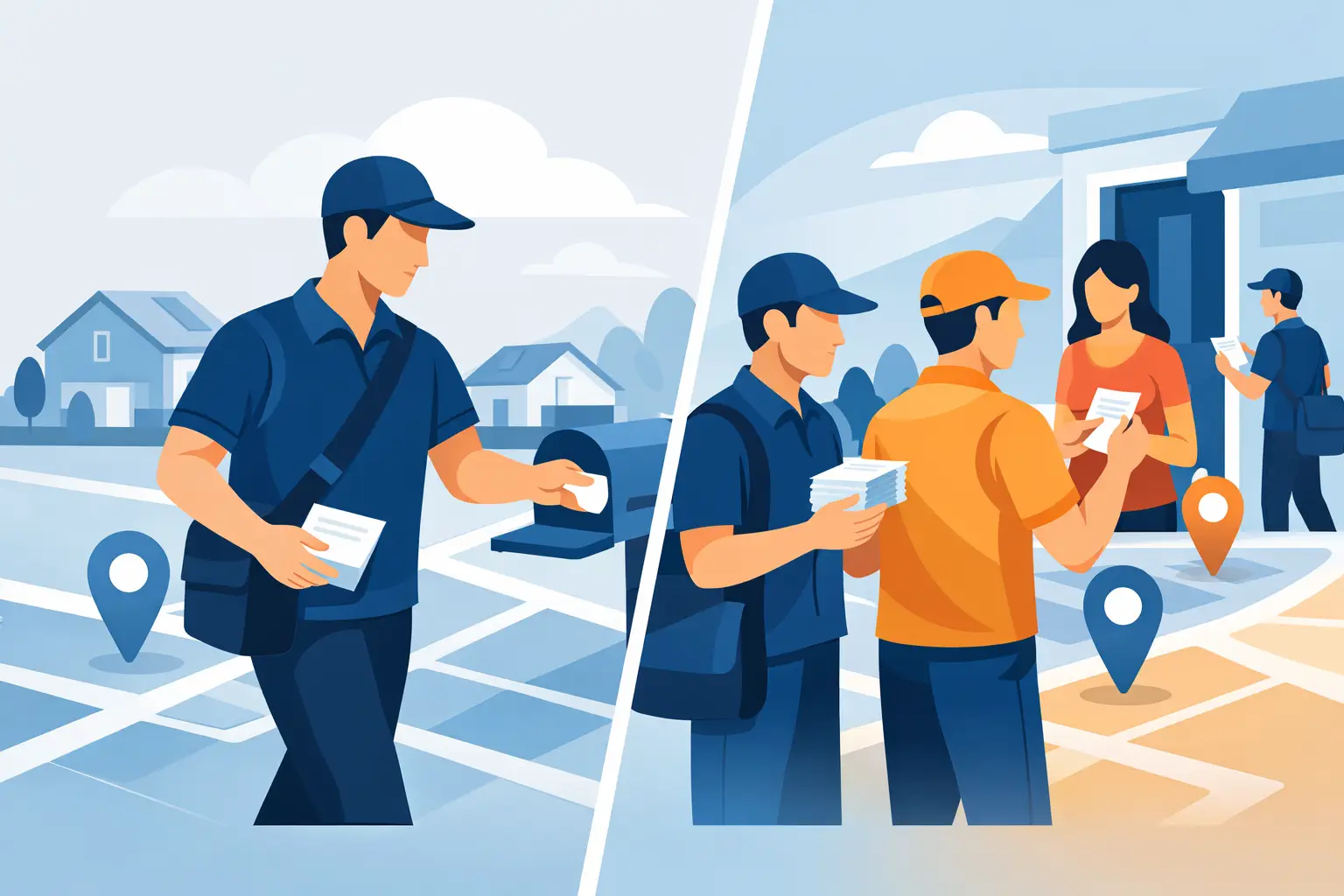
Solo vs Shared Leaflet Distribution
Compare solo vs shared leaflet distribution to choose the right balance of cost, reach and response for your…
Read article
If you want more local enquiries in PE2, broad advertising rarely gives you the control you need. Leaflet distribution PE2 works best when it is planned around the right streets, the right quantity and the right delivery method, rather than simply printing a stack of flyers and hoping for the best.
PE2 covers a wide mix of residential areas, from established neighbourhoods to newer housing developments. That matters because not every campaign needs the same approach. A local tradesperson promoting seasonal work will need something different from a nursery advertising open days, or a takeaway pushing a new menu. The point is not just reaching homes. It is reaching the right homes in the right volume.
Digital advertising has its place, but many local businesses have found the same problem – rising ad costs, weak targeting at street level and little sense of what was actually seen by real households nearby. Print gives you something more direct. Your message lands in the home, in a physical format, in the areas you have chosen.
That directness is often what makes the difference. A leaflet can sit on a kitchen counter, be passed to another family member or be kept for later when the service is needed. For local services in particular, that staying power can outperform short-lived online impressions.
It also gives you tighter control over geography. If you only want to focus on PE2 because that is where your team can service efficiently, where your offer is strongest or where you want to build repeat trade, leaflet delivery lets you do exactly that. You are not paying to appear in places that are outside your realistic catchment.
A good campaign starts with a simple commercial question – what result are you trying to get? More bookings, more footfall, more calls, more awareness for a local launch. Once that is clear, the campaign can be built around it.
The first factor is area selection. PE2 is not one single customer type. Household profile, density and property mix can vary noticeably across different parts of the postcode. If your service suits family households, owner-occupiers or particular income ranges, selecting the right sections matters more than simply covering the whole area.
The second factor is quantity. Too little coverage can make a campaign easy to miss. Too much, too soon can waste budget if the offer is not right. In most cases, the best approach is to match print numbers to a realistic target area and a realistic response goal. That keeps spend under control and makes results easier to judge.
The third factor is format. Some businesses benefit from shared distribution because it keeps costs lower while still giving solid local reach. Others are better suited to solo distribution, where the leaflet arrives on its own and carries more impact. There is no single correct choice. It depends on budget, competition, timing and how strong the offer is.
For many local businesses, shared distribution is a sensible starting point. It gives you broad household coverage without the higher cost of a standalone campaign. If you are promoting a straightforward offer, building awareness or testing a new area, this can work well.
Solo distribution is usually the better option when the campaign has higher value riding on it. If you are launching a new business, pushing a time-sensitive promotion or targeting a service with strong margins, being the only item delivered can improve visibility. It costs more, but in some cases that extra impact is worth it.
There is also the question of timing. A one-off campaign can produce a response, but repeated delivery often performs better because familiarity matters. Householders may not need a plumber, cleaner, tutor or landscaper on the day the leaflet arrives. They may need one two weeks later. Regular presence helps your business stay front of mind.
That is why the strongest campaigns are usually not the ones with the biggest print run. They are the ones with the clearest plan.
One of the biggest concerns with leaflet distribution is whether the material is actually delivered properly. That concern is fair. If you are paying for local coverage, you need confidence that the campaign has been carried out as agreed.
This is where reliability matters more than sales language. Verified routes, clear reporting and a provider that knows the area well are not extras. They are central to whether the campaign has value. Without accountability, even a well-designed leaflet and a strong offer can underperform because the delivery itself is weak.
Businesses that treat print seriously tend to ask practical questions. Which areas are being covered? How many households are included? What delivery method is being used? When will distribution take place? What reporting is provided afterwards? Those are the right questions, and any serious distribution partner should be able to answer them clearly.
PB Leaflet Distribution has built its service around that kind of straightforward accountability, which is exactly what businesses need when they are putting budget into physical marketing.
Start with the offer, not the artwork. Many campaigns fail because the leaflet looks fine but says very little that moves the reader to act. A strong local offer is clear, specific and easy to respond to. That might be a seasonal deal, a fixed-price service, a launch discount or a limited booking window.
Next, think about who in PE2 is most likely to respond. A domestic cleaning service may focus on family-heavy residential streets. A local takeaway might choose densely populated sections where repeat ordering is realistic. A roofing company may want broader coverage but only within the radius it can service profitably.
Then decide how much repetition the campaign needs. For lower-cost consumer services, a single run may be enough to test interest. For more considered purchases, repeat delivery is often stronger because trust builds over time. It depends on the buying cycle and how urgent the service feels to the customer.
Finally, measure what comes back. Use a dedicated phone number if possible, a clear offer code or simply ask new callers where they heard about you. Print does not have to be vague. If the targeting is tight and the delivery is dependable, response can be tracked well enough to inform the next campaign.
The most common mistake is trying to say too much. A leaflet is not a brochure. It needs one clear message, a simple reason to act and contact details that are easy to find. If everything is treated as equally important, nothing stands out.
Another mistake is poor targeting. Covering every available street may sound efficient, but it often is not. If your ideal customer is concentrated in certain parts of PE2, focus there first. A smaller, better-targeted campaign will often outperform a wider one with no clear logic behind it.
There is also the issue of unrealistic timing. If you need immediate leads, your campaign has to be structured for that, with a direct offer and quick local relevance. If the aim is brand recognition, results may build over multiple rounds. Matching expectation to campaign type avoids disappointment.
And then there is budget allocation. Spending heavily on design and printing while treating delivery as an afterthought is rarely a smart move. Delivery is the stage that puts the material in front of the customer. If that part is not handled properly, the rest of the investment is weakened.
For some businesses, PE2 is the best place to start because it matches their existing service pattern, team availability or customer base. For others, it is a sensible test area before expanding into nearby postcode sectors. Either way, concentrating budget into a defined area usually produces clearer data than spreading it thinly across too many locations.
That local concentration also helps operationally. If your campaign brings in a lift in enquiries from one area, it is easier to manage jobs efficiently, reduce travel time and build local visibility through repeated presence. That can turn a one-off promotion into a stronger long-term patch.
The businesses that tend to get the best return from leaflet distribution are not the ones chasing maximum coverage at any cost. They are the ones making deliberate decisions about area, timing, format and follow-up.
If you are planning a PE2 campaign, keep it simple. Choose the right streets, put forward a strong offer and make sure the delivery is handled by a team that treats reliability as part of the result, not an afterthought.
Ready to plan your next leaflet campaign?
Get a Free Quote
Compare solo vs shared leaflet distribution to choose the right balance of cost, reach and response for your…
Read article
A local flyer campaign booking guide for planning areas, quantities, timing and delivery options so your print marketing…
Read article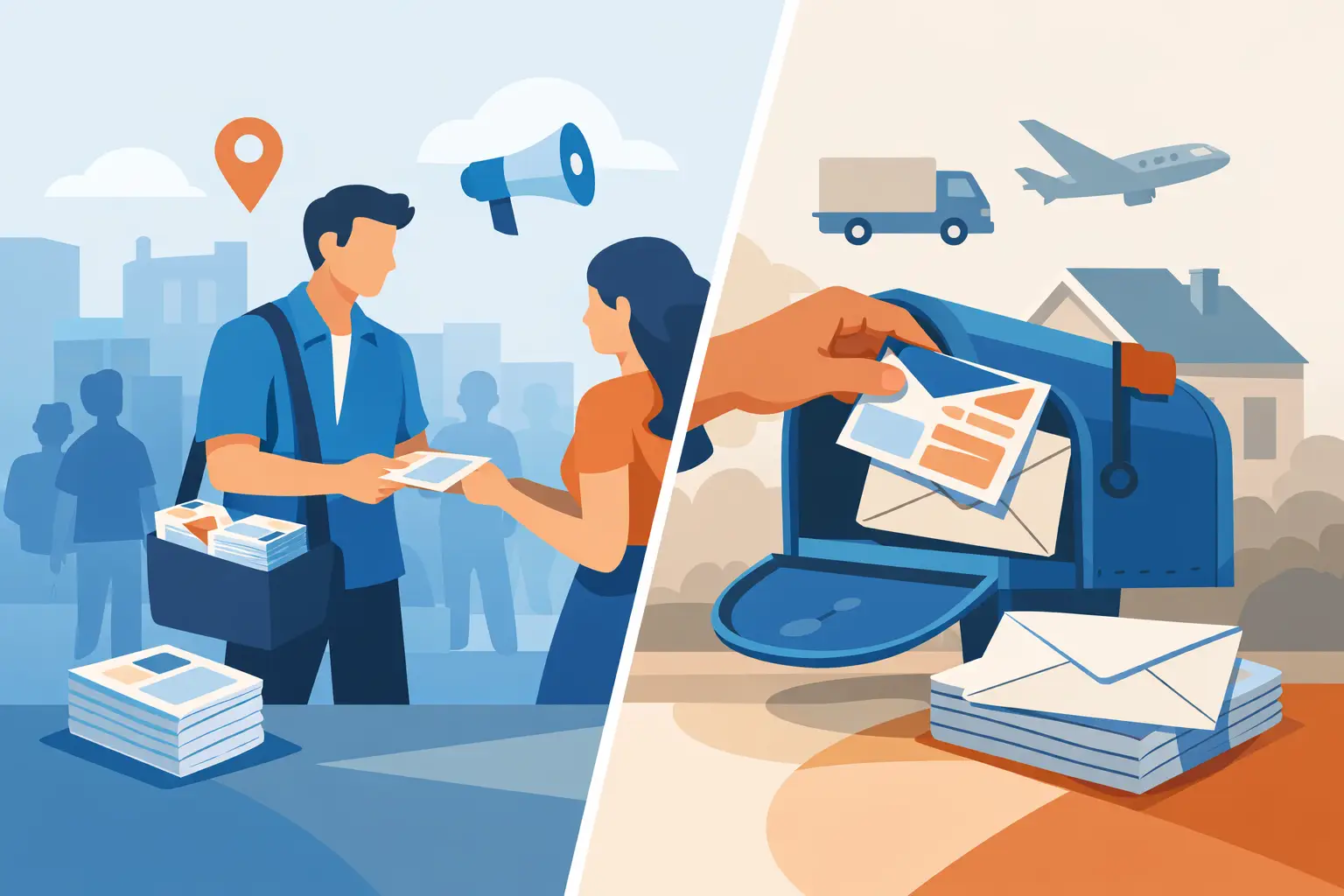
Flyer distribution vs direct mail: compare cost, targeting, reach and response so you can choose the right print…
Read article